Motion sensor light switches can turn lights on when you enter a room and off after you leave, making them useful for bathrooms, hallways, garages, laundry rooms, and other frequently used spaces.
This roundup compares 10 popular options across no-neutral installations, occupancy and vacancy modes, smart-home connectivity, load capacity, and multi-pack value.
Best 10 Motion Sensor Light Switches Picks for 2026
Best Overall
Lutron Maestro Motion Sensor Switch

- Reliable sensing detects minor movement
- Occupancy and vacancy modes
- Optional daylight detection
Best For: Bathrooms, garages, closets, and utility rooms
Best Value 2-Pack
TOPGREENER PIR Motion Switches

- Includes two switches and wall plates
- No neutral or ground wire required
- Adjustable occupancy and vacancy modes
Best For: Installing sensors in two single-pole rooms
Best Smart Option
Kasa KS200MP2 Wi-Fi Motion Switch

- App and voice control
- Daylight, smart, and away modes
- Works with major smart-home platforms
Best For: Connected homes using 2.4GHz Wi-Fi
Best High-Capacity Pick
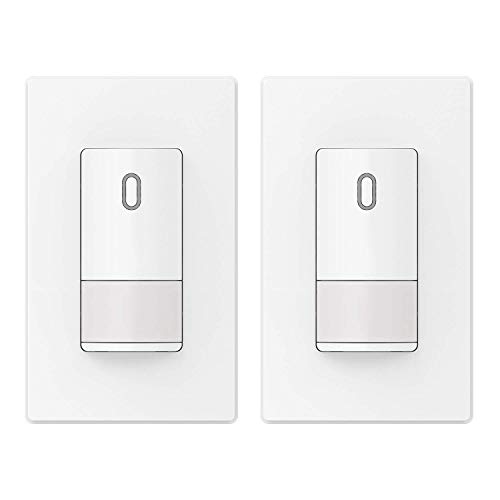
- Handles up to 300W LED or 600W incandescent
- Adjustable 120-degree detection area
- Automatic and manual control modes
Best For: Grounded single-pole circuits with larger loads
Best Multi-Room Value
6-Pack No-Neutral Motion Sensor Switches
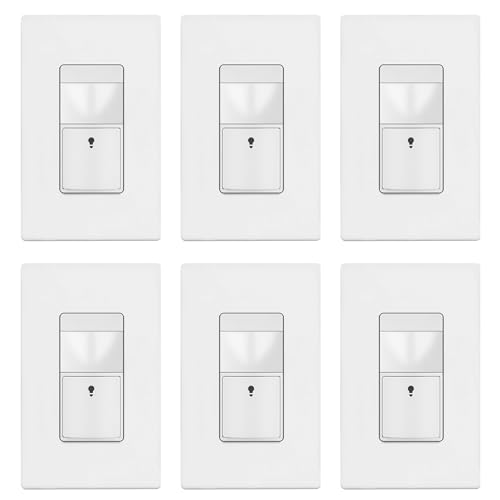
- Six-switch pack for multiple rooms
- 180° sensing with up to 1,200 sq. ft. coverage
- Occupancy and vacancy modes with adjustable delays
Best For: Multi-room upgrades
Best Established Brand
Leviton No-Neutral Motion Switch

- 180° field of view with 900 sq. ft. coverage
- Automatic-on/off or manual-on vacancy operation
- Slim profile and five-year limited warranty
Best For: Compact single-pole installations
Best with Extra Features

- Occupancy and vacancy modes
- Adjustable delay, sensitivity, and light level
- Neutral wire and single-pole installation
Best For: Indoor rooms needing customizable automatic lighting
Best Two-Pack Value

- Two switches with wall plates included
- 980-square-foot coverage with 180° view
- Auto, On, and Off override modes
Best For: Outfitting two single-pole rooms
Best for No-Neutral Retrofits

- No neutral wire required
- Grounding wire required for operation
- 10-pack for larger installations
Best For: Multiple single-pole replacements without neutral wiring
Best Overall – Lutron Maestro Motion Sensor Switch
For dependable motion sensor light switches, the Lutron Maestro stands out with sensing technology designed to detect small movements without switching the lights off unexpectedly. It supports automatic or manual-on operation and can help reduce wasted lighting.
Best For: Bathrooms, garages, laundry rooms, closets, and spaces where reliable motion detection matters.
Pros:
- Patented XCT sensing helps detect minor movement, such as reading or typing.
- Offers occupancy and vacancy modes with adjustable 1-, 5-, 15-, or 30-minute shutoff delays.
- Optional daylight detection can prevent the lights from turning on when sufficient light is available.
- Can be installed without a neutral wire when a ground wire is available.
Cons:
- Single-pole installation only.
- Coordinating wallplate is sold separately.
- Limited to a 2-amp load.
This is a strong choice if you prioritize reliable sensing and flexible shutoff settings over smart-home connectivity. Check the wiring and load requirements before installation.
Best Value 2-Pack – TOPGREENER PIR Motion Switches
This two-pack gives you a practical way to add motion sensor light switches in multiple rooms. The switches work without a neutral or ground wire, include wall plates, and offer occupancy or vacancy operation with adjustable time delays.
Best For: Homeowners outfitting two single-pole locations on a budget.
Pros:
- Two switches and wall plates are included.
- Designed to operate without a neutral or ground wire.
- Supports occupancy and vacancy modes.
- Offers a 180-degree field of view and adjustable 15-second, 10-, 20-, or 30-minute delays.
Cons:
- Suitable for single-pole wiring only, not three-way circuits.
- Limited to 5–150W LED, 300W tungsten, and compatible ballast loads.
- Operating temperature range is 32–104°F.
Choose this set when you need two basic sensor switches and want to avoid neutral-wire requirements. Its included wall plates and broad coverage add convenience for straightforward installations.
Best Smart Option – Kasa KS200MP2 Wi-Fi Motion Switch
The Kasa KS200MP2 combines motion sensor light switches with app and voice control. It can detect daylight, follow customized schedules, and connect with Alexa, Google Assistant, Samsung SmartThings, and other Kasa devices.
Best For: Smart-home users who want motion-triggered lighting plus remote and voice control.
Pros:
- Supports Alexa, Google Assistant, Samsung SmartThings, and Kasa smart actions.
- Daylight detection can keep lights off when ambient light is sufficient.
- Smart and away modes allow customized routines and occupancy-style automation.
- Works with incandescent, halogen, CFL, and low-voltage lighting within its listed ratings.
Cons:
- Requires a neutral wire and 2.4GHz Wi-Fi.
- Designed for single-pole installations.
- Setup depends on the Kasa app and a compatible smart-home network.
This is the most capable option for connected homes, especially if you already use Kasa devices or voice assistants. Confirm that your electrical box has a neutral wire before buying.
Best High-Capacity Pick – ELEGRP PIR Motion Switch
The ELEGRP is a practical choice among motion sensor light switches when load capacity and a clean rocker-style design are priorities. It supports automatic or manual control and handles up to 300W LED or CFL and 600W incandescent lighting.
Best For: Single-pole rooms with compatible higher-wattage lighting and an available ground wire.
Pros:
- Supports up to 300W LED, 300W CFL, or 600W incandescent loads.
- Provides a 120-degree detection area with adjustable sensitivity.
- Offers automatic and manual ON/OFF modes.
- Uses a matte, frameless thermoplastic design.
Cons:
- Requires a working ground wire.
- Not suitable for three-way circuits.
- Includes a one-year warranty.
Consider this model when your wiring includes a ground connection and your lighting load exceeds the limits of smaller sensor switches. Its straightforward controls suit installations that do not need Wi-Fi or app features.
Best Multi-Room Value – 6-Pack No-Neutral Motion Sensor Switches
For shoppers replacing several switches at once, these motion sensor light switches combine no-neutral installation with occupancy and vacancy modes. The six-pack includes wall plates and offers adjustable shutoff timing for spaces such as garages, closets, and bathrooms.
Best For: Multi-room upgrades where a six-pack and broad coverage are useful.
Pros:
- Six switches are included for outfitting multiple rooms.
- No neutral wire is required, and the interchangeable hot and load wires simplify installation.
- Provides 180-degree detection, up to 1,200 square feet of coverage, and time delays from 15 seconds to 30 minutes.
- Supports both automatic-on occupancy and manual-on vacancy modes.
Cons:
- Designed for single-pole circuits only, not three-way installations.
- Requires copper wire and a proper ground connection for installation.
- The 5A rating may limit compatibility with higher-load applications.
This is the most practical choice when you need several matching switches and want flexible sensing settings without adding a neutral wire. Confirm the circuit and load requirements before installation.
Best Adjustable Settings – ECOELER No-Neutral Motion Switch
This ECOELER motion sensor light switch is a flexible single-switch option for homes without a neutral wire. It lets you adjust detection sensitivity, shutoff timing, and light-level sensing, making it easier to tune performance for bathrooms, closets, garages, and hallways.
Best For: Homeowners who want detailed control over sensor behavior in a single-pole installation.
Pros:
- No neutral wire is required, though a proper ground wire is needed.
- Offers selectable occupancy and vacancy modes.
- Adjustable sensitivity ranges from 20% to 100%, with time delays from 15 seconds to 30 minutes.
- Includes a wall plate and is UL and FCC listed.
Cons:
- Not suitable for three-way installations.
- Supports up to 300W LED/CFL or 600W incandescent loads.
- It is sold as a single switch rather than a multi-pack.
Choose this model if fine-tuning is more important than buying several switches at once. Its broad adjustment range can help tailor automatic lighting to rooms with different traffic patterns and ambient light.
Best Established Brand – Leviton No-Neutral Motion Switch
The Leviton DOS02-LW is a compact motion sensor light switch for single-pole applications, with automatic-on/automatic-off or manual-on vacancy operation. Its 180-degree field of view and 900-square-foot coverage suit practical locations such as pantries, closets, laundry rooms, and basements.
Best For: Buyers seeking a compact, brand-name switch with automatic or manual-on operation.
Pros:
- Works with or without a neutral wire, while a ground is required.
- Provides a 180-degree field of view and coverage up to 900 square feet.
- Supports automatic-on/automatic-off and manual-on vacancy switching.
- Has a slim profile and a five-year limited warranty.
Cons:
- Rated for 2A, with lower load limits than some multi-purpose switches.
- Designed for single-pole use.
- Does not list adjustable sensitivity or time-delay ranges in the supplied specifications.
This Leviton is a sensible pick for a straightforward, compact installation backed by a longer stated warranty. Check the connected lighting load and wall-box wiring before choosing it.
Best with Extra Features – ECOELER Motion Sensor Switch
The ECOELER is a versatile option for shoppers comparing motion sensor light switches for indoor spaces such as hallways, bathrooms, garages, laundry rooms, and basements. Its occupancy and vacancy modes let you choose between automatic activation or manual turn-on, while adjustable timing, sensitivity, and light-level settings provide useful control.
Best For: Indoor single-pole installations where adjustable sensor behavior and neutral-wire compatibility are suitable.
Pros:
- Offers both occupancy and vacancy operating modes.
- Adjustable time delay, sensitivity, and light-level sensing.
- Supports up to 300W LED or CFL and 600W incandescent loads.
- UL certified, FCC listed, and California Title 24 compliant.
Cons:
- Requires a neutral wire and qualified wiring evaluation.
- Designed for single-pole, one-way circuits rather than 3-way setups.
Choose this model if customization matters more than three-way flexibility. Its broad indoor use cases and selectable operating modes make it a practical fit for spaces with different lighting routines.
Best Two-Pack Value – TOPGREENER PIR Motion Switch
The TOPGREENER TSOS5-W is a two-pack choice for shoppers outfitting multiple rooms with motion sensor light switches. It detects occupancy across up to 980 square feet with a 180-degree field of view, and its Auto, On, and Off modes allow either sensor-based control or manual override.
Best For: Multi-room indoor projects that need two single-pole occupancy switches with included wall plates.
Pros:
- Includes two switches and wall plates.
- Provides Auto, On, and Off operating modes.
- Offers up to 980-square-foot coverage and a 180-degree field of view.
- Adjustable sensitivity from 30% to 100% and multiple time-delay settings.
Cons:
- Requires hot, neutral, ground, and load wiring.
- For single-pole applications only; not suitable for 3-way or multi-way circuits.
This pack is especially practical when two rooms need matching controls. Confirm the wiring and load requirements before installation, particularly if replacing switches in older boxes.
Best for No-Neutral Retrofits – ELEGRP Occupancy Switch
The ELEGRP SP17OS-WH10 is a 10-pack designed for larger installations where no neutral wire is available. These motion sensor light switches use automatic or manual control, fit single-pole applications, and support LED, CFL, and incandescent bulbs. A grounding wire is required for operation.
Best For: Larger indoor switch replacements in homes without neutral wires, provided grounding and single-pole requirements are met.
Pros:
- No neutral wire is required, though a grounding wire is required.
- Includes 10 switches with a matte white finish and wall-plate-ready design.
- Supports 300W LED, 300W CFL, and 600W incandescent loads.
- Offers automatic or manual On/Off operation.
Cons:
- Requires grounding for function.
- Not suitable for 3-way circuits.
- Large 10-pack may be more than needed for a small project.
The main advantage here is installation flexibility in homes lacking neutral wires. Consider this pack when several compatible single-pole locations need the same low-profile, matte-finish control.
How We Picked the Best Motion Sensor Light Switches
We evaluated these switches based on installation requirements, sensing performance, control options, electrical compatibility, and overall practicality. Models that work without a neutral wire can simplify upgrades in older homes, while neutral-required switches may offer broader compatibility or more advanced features. We also considered whether each switch is designed for single-pole circuits, supports LED loads, includes a wall plate, or adds app and voice control.
Because room layout and wiring vary, product descriptions and installation instructions should be checked carefully before purchase. Electrical work should be completed according to local codes, and a qualified electrician is the safest choice when wiring is uncertain.
Quick Comparison
- Best for smart-home control: Kasa KS200MP2, with Wi-Fi connectivity and app-based control.
- Best for no-neutral installations: Lutron, Leviton, TOPGREENER, ELEGRP, and ECOELER models identified as no-neutral designs.
- Best for larger projects: TOPGREENER multi-packs, which can outfit several rooms at once.
- Best for flexible activation: Models offering occupancy and vacancy modes, allowing automatic or manual turn-on preferences.
- Best for LED-focused installations: Switches that clearly list LED wattage or load compatibility in their specifications.
Key Buying Factors for Motion Sensor Light Switches
Wiring and Circuit Type
First determine whether your electrical box has a neutral wire. No-neutral switches are useful for older wiring, but they may have specific minimum-load requirements or compatibility limitations. Also confirm that the switch is intended for a single-pole circuit rather than a three-way setup.
Occupancy Versus Vacancy Mode
Occupancy mode turns lights on automatically when motion is detected. Vacancy mode requires manual activation but turns lights off automatically, which can reduce unwanted activation from pets, passersby, or changing daylight. Adjustable timeout and sensitivity settings are valuable in either mode.
Load Capacity and Bulb Compatibility
Check the listed wattage and supported bulb types, especially for LED fixtures. The total connected load must remain within the switch’s rating. Some products are limited to particular loads or require a compatible bulb for reliable operation.
Detection Range and Placement
Choose a sensing range suited to the room. A wide field of view helps in garages and open spaces, while adjustable sensitivity can prevent false triggers in smaller rooms. The switch should have a clear view of the area where motion is expected.
Smart Features and Installation Extras
A Wi-Fi model may be worthwhile if you want schedules, remote control, or voice-assistant integration. For simpler installations, a standard wall switch may be preferable. A supplied wall plate, neutral-free design, and multi-pack pricing can also improve overall value.
Who Should Buy Which Motion Sensor Light Switches?
Choose the Kasa model if smart-home control is your priority. For older homes without neutral wiring, consider the clearly labeled Lutron, Leviton, TOPGREENER, ELEGRP, or ECOELER no-neutral options. Buyers outfitting several rooms should look at the TOPGREENER two- or six-pack. For garages, laundry rooms, and utility spaces, prioritize occupancy sensing, adequate detection range, and a timeout that prevents lights from staying on unnecessarily. If you want more control over automatic activation, select an occupancy/vacancy model rather than a basic motion-only switch.