Reliable power can make overlanding more comfortable, especially when you need to recharge a power station, camera batteries, phones, lights, or communications gear far from a campsite outlet.
These 10 portable solar panels cover compact 50W and 100W options through high-output 200W, 400W, and 450W designs. The right choice depends on your daily energy needs, vehicle storage space, charging inputs, and expected weather.
Best 10 Portable Solar Panel for Overlanding Picks for 2026
Best Lightweight Pick

- Weighs about 2.1 pounds
- USB-A, USB-C, and DC outputs
- IP68-rated panel protection
Best For: Lightweight overlanding kits and smaller electronics
Best 200W Suitcase Design
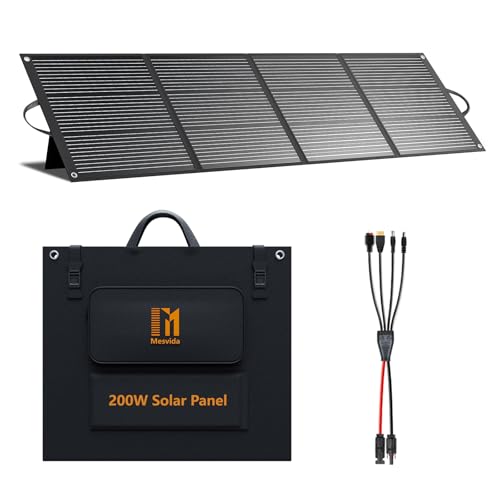
- 200W output with 23.5% efficiency
- Quick-lock stand and suitcase handle
- MC4 plus multiple adapter options
Best For: RV and power-station overlanding setups
Best High-Output Option
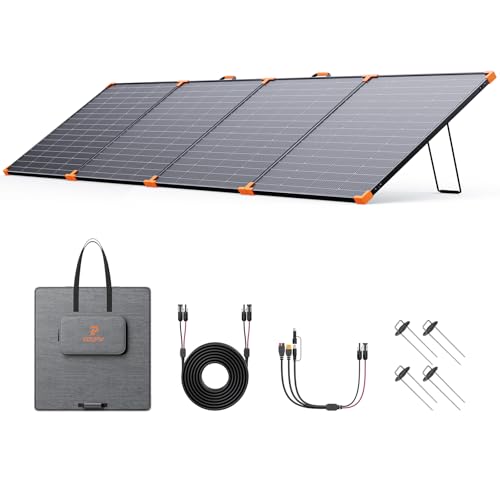
- 450W output and 25% efficiency
- Built for 40–60V power stations
- Includes kickstands and adapter cable
Best For: Large power stations and RV boondocking
Best All-Around Midrange Pick

- 100W output with 23%+ efficiency
- USB-C, USB-A, and DC outputs
- Weighs 4.1 pounds and folds compactly
Best For: Moderate off-grid charging and emergency kits
Best High-Efficiency Pick
Renogy 200W Foldable Solar Panel

- 25% efficient N-Type 16BB cells
- USB-C and dual USB-A device charging
- 13.9-pound foldable design with four kickstands
Best For: Overlanders needing versatile charging for devices and power stations
Best Weatherproof Option
220W IP67 Foldable Solar Panel

- 25.5% efficient 220W N-Type panel
- IP67 ETFE weather-resistant construction
- Includes multi-connector adapter cable
Best For: Overlanders prioritizing durability and broad cable compatibility
Best for Comfort

- About 11 pounds for easier transport
- Up to 25% efficient N-Type cells
- Includes 3-in-1 power-station adapter cable
Best For: Mobile overlanders who prioritize low carry weight
High-Capacity Pick

- 400W output and 23.4% efficiency
- MC4 connection for many power stations
- IP65 ETFE surface with kickstands
Best For: Overlanders needing high solar capacity
Best Heavy-Duty Pick

- 6-pound foldable, laptop-bag-size design
- USB-A, USB-C, and 20V DC outputs
- Includes cables and multiple adapters
Best For: Compact overlanding and direct device charging
Balanced Midrange Pick

- 200W output with up to 23.5% efficiency
- Four-in-one cable for varied power stations
- Durable PET and 840D Oxford construction
Best For: Vehicle-based trips needing moderate solar capacity
Best Lightweight Pick – 50W Foldable Solar Panel
If you want a compact portable solar panel for overlanding, this 50W foldable model is easy to pack and carry. It includes USB-A, USB-C, and DC outputs for charging phones, GPS units, cameras, power banks, and compatible power stations in sunny conditions.
Best For: Lightweight overlanding kits, hiking, camping, and charging smaller electronics.
Pros:
- Folds to about 14.69 × 7.88 × 1.19 inches and weighs approximately 2.1 pounds.
- Offers USB-A, USB-C PD up to 30W, and DC output options.
- ETFE construction, IP68-rated panel protection, and included connector adapters.
Cons:
- It does not store power, so charging depends on available sunlight.
- The junction box is not waterproof.
- The 50W capacity is better suited to smaller devices than high-capacity power stations.
This is a practical choice when packability matters more than maximum output. Its multiple ports and included adapters make it flexible for basic overlanding power needs.
Best 200W Suitcase Design – ETFE Foldable Solar Panel
This 200W portable solar panel for overlanding combines a suitcase-style foldable design with a built-in stand. Its ETFE surface, 600D Oxford fabric, MC4 output, and included adapter cable make it a strong fit for RVs, camping setups, and compatible portable power stations.
Best For: Overlanders who want a higher-output folding panel for power stations and RV use.
Pros:
- Provides up to 200W with stated 23.5% efficiency and A+ cells.
- Includes a quick-lock stand, carry handle, buckles, and a cable pocket.
- Supports MC4 connections and adapters for Anderson, XT60, DC7909, and DC8020 inputs.
- Uses IP68 protection, ETFE material, and rugged 600D Oxford fabric.
Cons:
- Its larger folded dimensions make it less compact than lower-wattage panels.
- Compatibility depends on the power station accepting the listed voltage and connectors.
- The listed upper temperature rating is 104°F.
For overlanding rigs carrying a portable power station, this model offers a useful balance of output and deployability. The built-in stand and cable storage reduce setup friction at camp.
Best High-Output Option – 450W N-Type Solar Panel
For demanding overlanding power needs, this 450W portable solar panel for overlanding is designed for high-capacity solar generators with 40–60V input. Its N-type 16BB cells, four adjustable kickstands, adapter cable, and 29.5-pound fiberglass construction suit larger off-grid systems.
Best For: Large power stations, RV boondocking, and overlanding trips requiring substantial solar input.
Pros:
- Offers up to 450W with stated 25% conversion efficiency.
- Designed for compatible 40–60V power stations, including select EcoFlow, Anker, and Bluetti models.
- Includes four adjustable kickstands, a 13.12-foot extension cable, adapter cable, stakes, and storage bag.
- ETFE coating, sealed lamination, IP68 protection, and bypass diodes support outdoor use.
Cons:
- At approximately 29.5 pounds, it is substantially heavier than smaller folding panels.
- It is not compatible with low-voltage units below 30V input, including several listed Jackery and Bluetti models.
- Connectors should not be soaked, and the panel is not recommended for long-term fixed series or parallel connections.
This is the most capable option here for charging a suitably rated large power station, but voltage compatibility is essential. Verify your generator’s input range before choosing it.
Best All-Around Midrange Pick – FlexSolar 100W Panel
This 100W portable solar panel for overlanding offers a useful middle ground between portability and charging flexibility. It folds into a compact package, weighs 4.1 pounds, and provides USB-C, USB-A, and DC outputs for devices and compatible portable power stations.
Best For: Road trips, camping, emergency kits, and overlanders needing moderate output without a large panel.
Pros:
- Produces up to 100W and uses monocrystalline cells with stated 23%+ efficiency.
- Includes PD 3.0 45W USB-C, 18W USB-A, and 100W DC outputs.
- Folds to about 12.99 × 10.43 × 2.17 inches and weighs 4.1 pounds.
- Includes a 4-in-1 cable with DC5521, DC7909, Anderson, and XT60 connectors.
Cons:
- Its 100W capacity is less suitable for rapidly charging very large power stations.
- Charging performance will vary with sunlight and outdoor conditions.
- Although rated IP67, cables and connected equipment still require careful handling around water.
FlexSolar’s combination of moderate output, compact folding dimensions, and three output types makes it a versatile everyday overlanding panel. It is especially convenient when you want to charge both personal devices and a portable power station.
Best High-Efficiency Pick – Renogy 200W Foldable Solar Panel
For overlanders who want a high-output portable solar panel for overlanding, the Renogy 200W model combines 25% efficiency with a compact folding design. Its four kickstands, magnetic closure, and direct USB charging make it practical for campsites, SUVs, and RV setups.
Best For: Overlanders who want direct phone, tablet, laptop, or camera charging alongside power-station compatibility.
Pros:
- 25% efficient N-Type 16BB cells can capture more energy in limited or cloudy conditions.
- Built-in USB-C PD 45W and dual USB-A ports can charge up to three devices directly.
- Folds to 23.72 x 22.99 x 1.97 inches, weighs 13.9 pounds, and includes four adjustable kickstands.
- UL 61730 certified and backed by a two-year material and workmanship warranty.
Cons:
- Uses MC4 output, while the 4-in-1 adapter is sold separately.
- Users must verify that their power station meets the panel’s input requirements.
The Renogy is a well-rounded choice when portability, direct device charging, and efficient power generation matter equally. Its separate-adapter requirement is the main setup consideration.
Best Weatherproof Option – 220W IP67 Foldable Solar Panel
This 220W panel is a strong portable solar panel for overlanding when weather resistance and included connection options are priorities. Its ETFE coating, IP67 rating, four kickstands, and bundled adapter cable suit boondocking, camping, and extended off-grid travel.
Best For: Overlanders who need a weatherproof panel with multiple power-station connectors included.
Pros:
- 220W output and 25.5% efficiency use N-Type 16BB monocrystalline cells.
- IP67 waterproof and dustproof construction with ETFE coating and PID resistance.
- Includes an MC4 extension cable with XT60, Anderson, DC7909, DC8020, DC5525, DC35135, and DC5521 connectors.
- Four adjustable kickstands and a compact folded design support quick outdoor setup.
Cons:
- Its 40V operating voltage may exceed the input limit of some power stations.
- Some power stations may not accept the full 220W output because of their own input limits.
- At 14.3 pounds, it is heavier than some 200W alternatives.
The panel’s standout advantage is its rugged weather protection and broad included cable selection. Check both maximum input voltage and wattage before pairing it with a solar generator.
Best for Comfort – HQST 200W N-Type Solar Panel
The HQST 200W panel is a practical portable solar panel for overlanding for travelers who want lower carry weight without giving up rigid, adjustable positioning. It weighs about 11 pounds, folds to 1.97 inches thick, and includes a 3-in-1 adapter cable for common power stations.
Best For: Overlanders who frequently move camp and want a lightweight panel with straightforward power-station connectivity.
Pros:
- Lightweight design weighs about 11 pounds and folds compactly for trunk storage.
- 16BB N-Type cells provide up to 25% efficiency.
- Included 4.9-foot 3-in-1 cable supports XT60, DC7909, and DC5521 connections.
- IP67 waterproof construction, laminated seams, and PVDF coating support outdoor use.
Cons:
- Only two adjustable kickstands are included.
- Power-station voltage and wattage limits still need to be checked before connection.
- The warranty is 12 months, shorter than some competing options.
Choose the HQST when carrying convenience is more important than maximum accessory features. Its low weight, included adapter, and weather-resistant construction make it especially suitable for mobile overlanding setups.
High-Capacity Pick – 400W Foldable Solar Charger
If you need a high-output portable solar panel for overlanding, this 400W foldable model is designed to recharge compatible power stations efficiently. Its 23.4% monocrystalline conversion rating, MC4 connection, adjustable kickstands, and IP65-rated construction suit extended off-grid trips, RV use, and emergency backup.
Best For: Overlanders who prioritize maximum stated wattage and broad power-station compatibility.
Pros:
- 400W maximum output with 23.4% conversion efficiency.
- MC4 connectors support compatibility with most portable power stations.
- Foldable design, adjustable kickstands, and rugged ETFE lamination.
- IP65 waterproofing and resistance to dust and high temperatures.
Cons:
- The 400W, 40V configuration may be more panel capacity than smaller power stations require.
- The supplied details do not specify the folded dimensions or weight.
This is the strongest choice here for buyers who want substantial solar input at camp. Before purchasing, confirm that your power station accepts the panel’s 40V output and MC4 connection.
Best Heavy-Duty Pick – 100W Multi-Output Solar Panel
For minimalist setups, this 100W portable solar panel for overlanding emphasizes easy transport and flexible charging. It weighs 6 pounds, folds to roughly laptop-bag size, and includes USB-A, USB-C, and DC outputs plus adapters for several power-station formats.
Best For: Overlanders, hikers, and campers who value low carry weight and direct device charging.
Pros:
- Lightweight 6-pound foldable design with built-in hanging grommets.
- Provides QC3.0 USB-A, PD3.0 USB-C, and a 20V DC port.
- Includes a 3-meter cable, multiple connectors, and six adjustable kickstands.
- 23.5% stated efficiency with IP65 waterproof and protective charging features.
Cons:
- At 100W, it will recharge large power stations more slowly than higher-wattage options.
- The numerous included connectors require checking compatibility before a trip.
This panel is a practical choice when storage space and carrying weight matter more than maximum charging speed. Its integrated device outputs also make it convenient for topping up smaller electronics without relying solely on a power station.
Balanced Midrange Pick – EBL 200W Foldable Panel
The EBL 200W is a balanced portable solar panel for overlanding, offering more charging capacity than a 100W model without moving to the largest option. Its monocrystalline cells, four kickstands, foldable format, and MC4-to-multiple-connector cable make it suitable for RVs, camping, and compatible outdoor generators.
Best For: Overlanders seeking a middle ground between portability and charging capacity.
Pros:
- 200W maximum power with stated conversion efficiency up to 23.5%.
- MC4-to-4-in-1 cable includes XT60, Anderson, DC7909, and aviation connectors.
- 840D Oxford cloth and PET lamination provide stated water, wear, and durability protection.
- Four kickstands and foldable construction support outdoor setup.
Cons:
- At about 18 pounds, it is substantially heavier than the 100W option.
- The folded dimensions are relatively large at 25.31 by 20.87 by 2.17 inches.
- Compatibility still depends on the input requirements of the specific power station.
Choose this EBL panel if 100W feels limiting but a 400W setup is unnecessary. Its included adapter range is useful for mixed gear, though its 18-pound weight and folded footprint should be planned for in a vehicle-based setup.
How We Picked the Best Portable Solar Panel for Overlanding
We focused on panels that suit vehicle-based travel and off-grid charging rather than treating peak wattage as the only deciding factor. The selection includes compact folding panels for lighter loads, midrange 100W to 200W models for common power stations, and larger 400W-plus options for extended stays or higher-demand equipment.
We also considered portability, folding design, stated conversion efficiency, weather protection, output versatility, and connector compatibility. Claims such as 200W or 450W describe ideal maximum output; real-world production varies with sunlight, temperature, panel angle, dust, shading, and the receiving power station.
Quick Comparison
| Power range | Best suited to | Main advantage | Potential drawback |
|---|---|---|---|
| 50W | Phones, lights, small batteries | Lightweight and easy to store | Slow for larger power stations |
| 100W | Weekend trips and moderate charging | Good portability-to-output balance | May be insufficient for heavy daily use |
| 200W–220W | Most overlanding power stations | Useful charging speed without extreme bulk | Heavier and more space-consuming |
| 400W–450W | Long stays and high energy demand | Faster replenishment in strong sun | Bulkier, heavier, and harder to position |
Key Buying Factors for a Portable Solar Panel for Overlanding
Match Wattage to Your Power Station
Check the power station’s maximum solar input voltage, current, and wattage before buying. A high-output panel can be wasted if the station cannot accept its full output. For basic electronics, 50W or 100W may be enough; refrigerators, laptops, and frequent battery charging usually justify 200W or more.
Check Connectors and Included Cables
MC4, XT60, Anderson, DC, USB-A, and USB-C connections are not interchangeable without the correct cable or adapter. Confirm both the panel output and your power station’s solar-input port. Built-in USB ports can be convenient for small devices, but they do not replace a compatible regulated connection for a power station.
Prioritize Practical Portability
Folding panels are easier to transport, but larger models can be awkward around a vehicle. Compare folded dimensions, weight, carrying handles, support legs, and cable storage. A panel that is easy to deploy and reposition may produce more useful energy than a larger panel left partially shaded.
Look for Weather Protection
IP65 and IP67 ratings can help protect against rain, splashes, and dust, but they do not mean the panel should be left outdoors indefinitely. Keep connectors dry, avoid standing water, and follow the manufacturer’s instructions for wet-weather use.
Who Should Buy Which Portable Solar Panel for Overlanding?
- Choose a 50W panel if you mainly need emergency phone, light, or small-battery charging and want the smallest setup.
- Choose 100W for compact overlanding kits, weekend trips, and moderate power-station use.
- Choose 200W to 220W if you regularly charge a power station, laptop, camera equipment, or other higher-demand devices.
- Choose 400W to 450W for extended off-grid stays, frequent refrigerator use, or faster recovery of a large power station—provided your storage space and solar input support it.
For most travelers, a 200W-class model is the practical middle ground. If weight and storage matter more than charging speed, a 100W panel is easier to live with; if energy independence is the priority, step up to a larger array and verify compatibility first.