Smart door alarms can help you catch unexpected openings, protect entry points, and stay informed whether you are home or away. The best options now range from simple chime-based sensors to app-connected systems with remote alerts.
In this roundup, we focus on practical, buyer-friendly picks with useful features like easy installation, battery efficiency, smart home compatibility, and dependable notifications.
Best 10 Smart Door Alarms Picks for 2026
Smart Home Entry Protection Kit
Tapo Matter-Compatible Door Sensor Starter Kit

- 3 contact sensors plus hub with chime
- Real-time alerts and 90 dB alarm
- Matter-compatible with major platforms
Best For: Smart-home users who want multi-door monitoring with automations
Simple Standalone Alarm
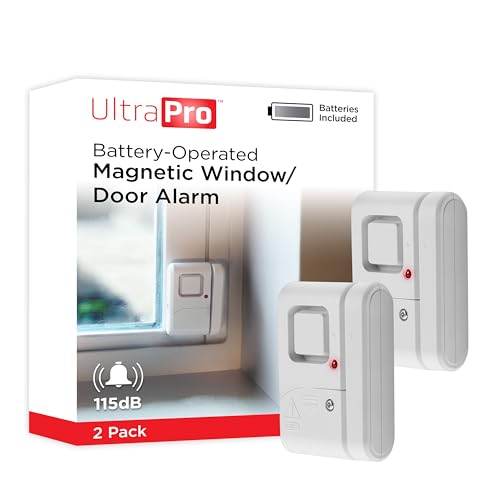
- 120 dB siren with chime mode
- Peel-and-stick, no wiring needed
- Battery-powered and easy to use
Best For: Buyers who want a basic indoor alarm without smart features
Long-Range Smart Monitoring
YoLink LoRa Door Sensor Starter Kit

- Up to 1/4 mile open-air range
- Hub plus 4 sensors with alerts
- Up to 5 years of battery life
Best For: Large properties and outbuildings needing long-range coverage
Entry Alert Chime System
SanJie Wireless Door Sensor Chime Kit

- 2 sensors and 1 plug-in receiver
- 500-foot range with 26 chimes
- 110 dB max volume and easy install
Best For: Stores, homes, or caregiving setups needing simple door-open alerts
eufy HomeBase Entry Sensor
Compact Door and Window Monitoring
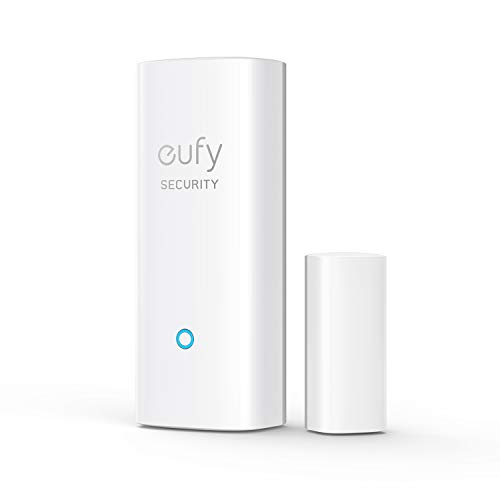
- Up to 800-day battery life
- Triggers 100dB siren via HomeBase
- Requires eufy HomeBase; indoor use only
Best For: Home users already using eufy HomeBase who want simple entry alerts
PHYSEN WiFi Door Chime
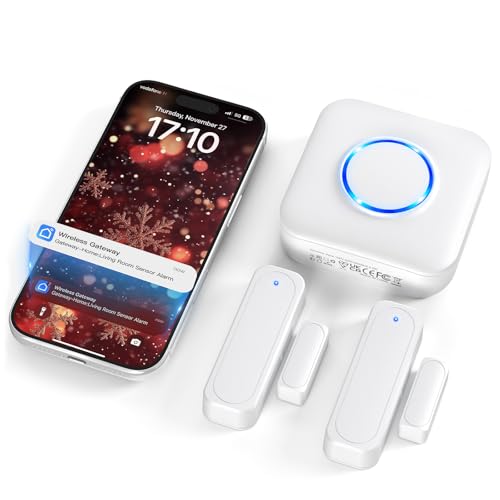
- Real-time Tuya/Smart Life notifications
- Up to 110dB with 5 volume levels
- Wire-free install; expandable up to 20 sensors
Best For: Families and small businesses that need loud, app-based entry alerts
Ring Alarm Slim Sensor Pack
Slim 2-Pack for Doors and Windows

- Instant alerts with Ring Protect subscription
- Slim, tool-free design for easy placement
- About 3-year battery life; base station required
Best For: Ring Alarm households adding compact door and window sensors
WiFi DIY Whole-Home Pick
tolviviov 8-Piece Smart Alarm Kit

- 8-piece system with siren, sensors, and remotes
- App alerts plus Alexa and Google Assistant support
- Expandable up to 20 sensors with no subscription
Best For: DIY home or apartment security with app control
App-Only Contact Sensor

- No hub or fees, with Tuya app alerts
- Alexa and Google Assistant compatible
- Included AAA batteries with low-battery warnings
Best For: Single doors or windows that need simple app alerts
Alexa-Compatible Starter Kit
tolviviov 8-Piece Alarm System

- Starter kit with siren, 5 sensors, and 2 remotes
- Alexa and Google Assistant voice control
- Expandable system with no subscription fee
Best For: Budget-friendly whole-home protection with voice control
Smart Home Entry Protection Kit – Tapo Matter-Compatible Door Sensor Starter Kit
If you want smart door alarms that do more than just beep, this Tapo starter kit is built for real-time entry monitoring across doors, windows, cabinets, and more. It includes three contact sensors plus a hub with a built-in chime, and it can send app notifications, trigger a customizable 90 dB alarm, and work with Matter-compatible smart home platforms.
Best For: Households that want app alerts, automation, and a hub-based smart alarm system for multiple entry points.
Pros:
- Includes 3 sensors and 1 hub with built-in chime
- Real-time notifications and full activity history in the Tapo app
- 90 dB customizable alarm for door or window openings
- Matter support and compatibility with Alexa, Google Home, and more
Cons:
- Sensors require the Tapo hub to operate
- Needs 2.4 GHz Wi-Fi for setup and connectivity
- Best suited to users who want app-based smart features rather than a standalone alarm
This is a strong pick if you want a connected security setup that can also automate lights or cameras when a door opens. The low-power design and hub-based range make it more scalable than a simple standalone contact alarm.
Simple Standalone Alarm – GE Wireless Door Alarm 2 Pack
For a straightforward option among smart door alarms, this GE wireless alarm keeps things simple with a magnetic sensor, loud siren, and easy tool-free installation. It does not connect to an app or smart home platform, but it can still add a useful layer of awareness for doors, windows, cabinets, and drawers.
Best For: Anyone who wants a basic, no-app door and window alarm for quick indoor protection.
Pros:
- Very loud 120 dB siren
- Selectable alarm or chime modes
- Simple peel-and-stick installation with no wiring
- Battery-powered with included LR44 batteries
Cons:
- Not smart home compatible
- No app, notifications, or automation features
- Best for indoor use rather than connected perimeter security
This is a practical pick if you want an inexpensive alert device that works right out of the box. It favors simplicity over connectivity, which can be exactly what some homes, dorms, RVs, and offices need.
Long-Range Smart Monitoring – YoLink LoRa Door Sensor Starter Kit
If range and battery life matter most, this YoLink starter kit stands out among smart door alarms. It includes a hub and four sensors, uses LoRa technology for long-distance coverage, and adds features like door-left-open reminders, app alerts, SMS/email notifications, and device-to-device pairing.
Best For: Larger homes, outbuildings, or property setups that need long-range sensor coverage and low-maintenance batteries.
Pros:
- Includes 1 hub and 4 door sensors
- Up to 1/4 mile open-air range with LoRa
- Up to 5 years of battery life
- Supports app, SMS/text, email, and Alexa/IFTTT/Home Assistant integrations
Cons:
- Hub is required for full functionality
- Needs a smartphone and 2.4 GHz Wi-Fi or wired internet for setup
- More feature-rich than a basic alarm, so setup may be more involved
This kit is a smart choice when Wi-Fi-based sensors would struggle to reach sheds, basements, or separate buildings. The long battery life and open-air range make it especially appealing for users who want less maintenance over time.
Entry Alert Chime System – SanJie Wireless Door Sensor Chime Kit
This SanJie kit is a practical alternative to app-based smart door alarms if you mainly want to know when a door opens. It includes two sensors and one plug-in receiver, offers a long 500-foot range, and gives you 26 chimes, five volume levels, and a loud 110 dB maximum output.
Best For: Shops, homes, or caregiving situations where a reliable door-open chime is more useful than app-based alerts.
Pros:
- Includes 2 sensors and 1 receiver
- 500-foot range for broader coverage
- 26 chimes with 5 adjustable volume levels
- Easy installation with pre-paired components and adhesive tape
Cons:
- Not smart home compatible
- Uses a receiver that plugs into AC power
- No app notifications or remote monitoring
For a simple entry alert, this system covers the basics well and adds flexibility with different tones for different sensors. It’s especially useful where you want an audible reminder without managing an app or cloud account.
Eufy HomeBase Entry Sensor – Compact Door and Window Monitoring
If you want smart door alarms that focus on simple contact detection, the eufy Security Entry Sensor is built for doors and windows with an easy-to-place, compact design. It sends smartphone alerts when a forced entry is detected and can trigger a 100-decibel siren through the required HomeBase.
Best For: Homeowners who want a small, battery-powered entry sensor with optional professional monitoring through eufy HomeBase.
Pros:
- Compact sensor fits doors and windows, making placement flexible.
- Long battery life is rated at up to 800 days.
- Can trigger a 100-decibel siren on HomeBase when forced entry is detected.
- Optional 24/7 professional monitoring is available.
Cons:
- Requires eufy Security HomeBase to work.
- Indoor use only.
- Only one sensor is included in the box.
For buyers building out a eufy system, this is a straightforward entry sensor with strong battery life and alert options. It is best when you want door and window monitoring that can scale into a fuller monitored security setup.
PHYSEN WiFi Door Chime – App Alerts for Busy Spaces
This smart door alarm is designed to alert you when a door or window opens, with real-time app notifications through Tuya or Smart Life. It adds a loud chime option for homes or businesses, so you can hear activity locally or check alerts from your phone.
Best For: Families, caregivers, and small businesses that want WiFi door alerts with adjustable chime volume.
Pros:
- Sends instant app push notifications when a door or window opens.
- Five volume levels go up to 110dB.
- Supports unique ringtones for different sensors.
- Wire-free setup with plug-in receiver and adhesive-mounted sensor.
Cons:
- Uses the Tuya/Smart Life app, so setup depends on app-based control.
- Optional SMS or phone call alerts cost extra.
- Sensor count is limited in the included package.
For shoppers who want practical smart door alarms without a subscription, this model stands out for free app notifications and flexible audio alerts. It is especially useful when you want to monitor openings in a home, storefront, or caregiving setting.
Ring Alarm Slim Sensor Pack – Slim 2-Pack for Doors and Windows
For Ring users comparing smart door alarms, this 2-pack contact sensor is a slim option for doors and windows that sends instant mobile alerts with a Ring Protect subscription. It is designed for easy, tool-free installation and needs the Ring Alarm Base Station to operate.
Best For: Ring Alarm owners who want a compact two-sensor add-on for door and window monitoring.
Pros:
- Slim design allows more placement options.
- Tool-free installation makes setup simple.
- Includes two CR2032 batteries.
- Rated for approximately 3 years of battery life.
Cons:
- Requires the Ring Alarm Base Station.
- Mobile alerts require a Ring Protect subscription sold separately.
- Only two sensors are included.
This is a practical add-on if you already use Ring Alarm and want a compact way to monitor openings. The combination of slim hardware, long battery life, and easy installation makes it a low-friction expansion choice.
WiFi DIY Whole-Home Pick – tolviviov 8-Piece Smart Alarm Kit
If you want smart door alarms that do more than just beep at the entryway, this tolviviov kit is a practical whole-home option. It combines a siren base station with door and window sensors, app alerts, and voice control, so you can monitor openings from your phone and expand the setup as your needs grow.
Best For: Apartments, houses, and DIY users who want an expandable WiFi alarm kit with app alerts and no subscription.
Pros:
- 8-piece kit includes a base station, 5 door/window sensors, and 2 remotes
- Works with Alexa and Google Assistant for Away, Disarm, and Home modes
- Supports expansion up to 20 sensors and 5 remote controls/keypads
- No contracts or subscription fee
Cons:
- Only works on 2.4GHz WiFi, not 5GHz
- Base station must stay connected to AC power
- Backup battery is emergency-only and lasts about 8 hours
Overall, this is a flexible smart door alarms system if you want a low-friction DIY install and room to expand later. The tradeoff is that it depends on 2.4GHz WiFi and continuous power at the hub, so it fits best in homes where those basics are easy to meet.
App-Only Contact Sensor – Tuya WiFi Door Sensor
This single-sensor option is a simple way to add smart door alarms to specific entry points, cabinets, or other openings. It sends app notifications when a door or window opens or closes, and it can also tie into other Tuya devices for basic automation.
Best For: Users who want a compact, no-hub contact sensor for app alerts and simple smart home triggers.
Pros:
- No hub required and no fees
- Works with Tuya Smart or Smart Life apps for instant alerts
- Compatible with Alexa and Google Assistant
- Runs on included 2 AAA batteries with low-battery app warnings
Cons:
- Only works on 2.4GHz WiFi, not 5GHz
- Single-sensor design is better for one opening at a time
- Requires app setup for full functionality
For targeted monitoring, this sensor is a straightforward pick that keeps setup simple while still offering app-based door status alerts. It makes the most sense when you only need to watch a few specific doors, windows, or storage areas rather than secure an entire home.
Alexa-Compatible Starter Kit – tolviviov 8-Piece Alarm System
For shoppers comparing smart door alarms for an apartment or house, this tolviviov kit offers a familiar starter layout with app alerts, voice control, and room to expand. It includes a siren station, multiple sensors, and remotes, making it a practical DIY option when you want broader home coverage without adding a subscription.
Best For: Budget-conscious buyers who want an expandable WiFi alarm kit with Alexa support and easy DIY setup.
Pros:
- 8-piece kit includes a siren station, 5 sensors, and 2 remotes
- Works with Alexa and Google Assistant for voice control
- Supports expansion up to 20 sensors and 5 remote controls/keypads
- No contracts or subscription fee
Cons:
- Only supports 2.4GHz WiFi
- Backup battery lasts about 8 hours and is emergency-only
- Alarm station must remain plugged into AC power
This is a solid choice if you want a full starter system rather than a single sensor, especially when Alexa compatibility matters. Its limitations are mostly the usual WiFi and power requirements, so it fits best in homes that can support a permanently powered hub.
How We Picked the Best Smart Door Alarms
We looked for Smart Door Alarms that balance reliability, ease of use, and value. Priority went to models with clear alert methods, simple mounting, strong battery life, and enough range or connectivity for real-world use. We also considered whether each option is better for basic entry alerts, family safety, or fuller home security coverage.
Quick Comparison
Some Smart Door Alarms are best for straightforward local sound alerts, while others send phone notifications, emails, or SMS messages. Starter kits with multiple sensors suit larger homes or users building a wider system. Hub-based setups often offer stronger ecosystem support, while WiFi or app-based sensors are more flexible for remote monitoring.
Key Buying Factors for Smart Door Alarms
Alert Type
Decide whether you want a loud local chime, a phone alert, or both. If you need to know immediately from anywhere, app notifications and text support matter more than sound alone.
Connectivity and Range
WiFi, hub-based, and long-range wireless systems each serve different needs. Basic sensors are fine for nearby use, but larger homes, detached buildings, or businesses may benefit from extended range or mesh-style networking.
Installation and Compatibility
Look for peel-and-stick installation and a design that fits your doors and windows. If you already use a smart home platform, compatibility with Matter, Alexa, or other ecosystems can make the system easier to manage.
Power and Maintenance
Battery life varies widely among Smart Door Alarms, so check how often replacements are needed. Longer-life batteries reduce upkeep, which is especially useful for multiple-entry homes or rental properties.
Who Should Buy Which Smart Door Alarms?
If you want simple, affordable entry alerts, basic chime systems are a strong fit. If remote monitoring matters most, choose a WiFi or app-connected sensor. For larger homes or users planning to expand, a hub-based starter kit is often the smarter long-term choice. Families, small businesses, and anyone managing multiple doors should prioritize multi-sensor packs and dependable notification options.
In short, the best Smart Door Alarms are the ones that match your space, your alert preferences, and how much control you want over your home security setup.