Carbon monoxide is invisible, odorless, and potentially dangerous, so reliable detection matters in every home with fuel-burning appliances, an attached garage, or portable heating equipment.
These 10 wireless carbon monoxide detectors cover interconnected systems, smart gateway setups, combination smoke and CO alarms, plug-in models, battery-powered units, and portable monitors.
Best 10 Wireless Carbon Monoxide Detectors Picks for 2026
Best Whole-Home Coverage
HEIMAN C1-R Wireless CO Detectors

- Wireless alarms sound together across up to 656 feet
- UL 2034 5th Edition and CSFM certified
- Compact, battery-powered design needs no Wi-Fi
Best For: Renters and homes wanting interconnected local alerts
Best Smoke-and-CO Combo

- Combines smoke and CO detection
- Wireless alerts sound through all linked alarms
- Sealed 10-year lithium batteries
Best For: Homes seeking combined, low-maintenance protection
Best Smart Monitoring
HEIMAN C1-R 3-Pack With Gateway

- Gateway sends real-time app notifications
- Local alarms sound together across up to 656 feet
- Supports listed smart-home platforms and HEIMAN devices
Best For: Connected homes wanting app-based CO monitoring
Best Plug-In Option

- 120V plug-in power with AA battery backup
- Rotating plug fits vertical or horizontal outlets
- 85 dB alarm and UL 2034 5th Edition testing
Best For: Single-room, apartment, or travel use
Long-Life Protection

- UL 2034 5th Edition and CSFM approvals listed
- FIGARO electrochemical sensor with 85 dB alarm
- Lithium battery and flexible mounting options
Best For: Landlords and homeowners wanting compact, low-maintenance CO monitoring
Trusted Everyday Coverage
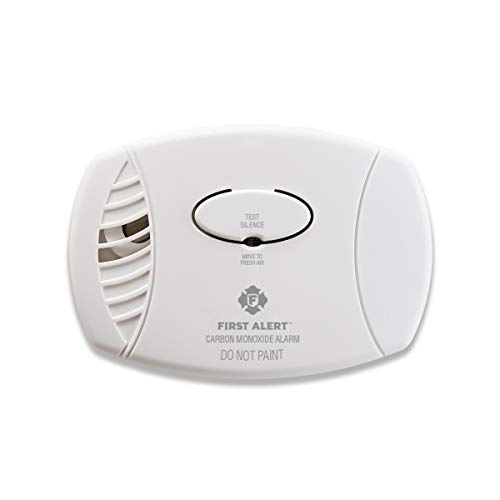
- Replaceable 9V battery supports continuous monitoring
- Electrochemical sensor and 85 dB audible alarm
- Includes mounting bracket and user materials
Best For: Households needing a simple battery-operated alarm for multiple rooms
Portable Professional Checks
TOPTES CT-580 Portable CO Meter

- 0–1000 PPM range with stated 0.3-second response
- Visual, audible, and vibration alert modes
- Rechargeable USB-C battery and TFT display
Best For: Travelers, campers, and professionals performing handheld CO inspections
Best with Extra Features

- Plug-in installation with AA battery backup
- 85 dB alarm and LED status indicators
- Peak-level memory and Test/Hush button
Best For: Outlet-powered home protection with outage backup
Maintenance-Free Combo

- Sealed lithium battery rated for 10 years
- Combines photoelectric smoke and electrochemical CO sensing
- 85 dB alarm with LCD display
Best For: Low-maintenance smoke and CO coverage
Portable Battery Pick

- Two-AA battery power with no wiring
- Compact design for home or travel
- 85 dB alarm, LED warning light, and Test/Hush button
Best For: Portable CO monitoring for homes, hotels, and rentals
Best Whole-Home Coverage – HEIMAN C1-R Wireless CO Detectors
For shoppers comparing wireless carbon monoxide detectors, the HEIMAN C1-R 3-pack emphasizes whole-home alerts without Wi-Fi. The units can interconnect across up to 656 feet, so when one detects CO, all connected alarms sound.
Best For: Renters, cabins, bedrooms, and homes needing interconnected CO protection without wiring or Wi-Fi.
Pros:
- Wireless interconnection makes all linked alarms sound together.
- UL 2034 5th Edition and CSFM certifications are listed.
- Battery-powered, compact design includes mounting hardware and magnetic pads.
- FIGARO electrochemical sensor is designed to resist humidity, steam, and temperature-related false alarms.
Cons:
- This package does not include the HEIMAN Gateway or app-based monitoring.
- It detects carbon monoxide but does not provide smoke detection.
The C1-R is a practical choice when synchronized local alarms matter more than smart-home features. Its small footprint and no-wiring setup also make it convenient for spaces where installation options are limited.
Best Smoke-and-CO Combo – X-Sense XP0H-WN 3-Pack
The X-Sense XP0H-WN combines smoke and carbon monoxide detection in one unit, making it a space-saving option among wireless carbon monoxide detectors. Its wireless interconnection lets every linked alarm sound when one detects smoke or CO.
Best For: Households that want combined smoke and CO protection with sealed batteries and synchronized alerts.
Pros:
- 2-in-1 photoelectric smoke and electrochemical CO detection.
- Wireless interconnection triggers all linked alarms together.
- Sealed 10-year lithium battery reduces battery-change tasks.
- ETL listed to meet UL 217 and UL 2034 safety standards.
Cons:
- It does not support Wi-Fi or a base station.
- The large 5.7-inch mounting bracket may not suit every installation location.
This is a strong fit if you prefer one alarm to cover two hazards and want a low-maintenance sealed battery. Choose another option if app notifications or hub integration are priorities.
Best Smart Monitoring – HEIMAN C1-R 3-Pack With Gateway
For buyers who want wireless carbon monoxide detectors with remote awareness, this HEIMAN bundle adds a gateway to three interconnected C1-R alarms. The alarms sound together locally, while the gateway can send real-time push alerts through the HEIMAN app.
Best For: Smart-home users who want local all-alarm alerts plus app monitoring and compatible automation options.
Pros:
- Includes three CO alarms and a gateway for app alerts.
- Wireless alarms can interconnect across up to 656 feet.
- App supports status checks, battery monitoring, alarm logs, testing, and silence functions.
- Works with listed platforms including Home Assistant, IFTTT, Google Home, and SmartThings when properly configured.
Cons:
- Smart features require gateway setup and a compatible ecosystem or platform.
- It provides CO detection rather than combined smoke detection.
- The gateway adds setup complexity compared with a standalone interconnected kit.
This bundle is the most feature-rich choice in the group for connected monitoring. It retains battery-powered installation and local synchronized alarms while adding remote notifications and broader HEIMAN device compatibility.
Best Plug-In Option – Kidde COP CO Detector
The Kidde COP offers a straightforward alternative to wireless carbon monoxide detectors: it plugs into a 120V outlet while two included AA batteries provide backup during outages. Its rotating plug supports vertical or horizontal outlets, and the compact design is suitable for home or travel.
Best For: Apartments, homeowners, and travelers who want a single plug-in CO alarm with battery backup.
Pros:
- 120V plug-in power with two AA backup batteries.
- Rotating plug fits vertical or horizontal outlets.
- Loud 85 dB alarm, LED warning light, and Test/Hush button.
- UL 2034 5th Edition tested, ETL listed, and backed by a 10-year limited warranty.
Cons:
- This is a single detector, not a multi-pack.
- It is not described as wirelessly interconnected or app-connected.
- It depends on an outlet for primary power.
The COP is a sensible pick when you want simple installation and dependable outlet power rather than networked alarms. Its travel-ready format is also useful for hotels and vacation rentals where an extra CO alarm may provide added awareness.
Long-Life Protection – Heiman C1-S
The Heiman C1-S is a compact choice for shoppers comparing wireless carbon monoxide detectors for residential or light commercial spaces. Its battery-powered design, electrochemical FIGARO sensor, 85 dB alarm, and wall, ceiling, or tabletop installation offer flexible everyday monitoring.
Best For: Homeowners, landlords, and property managers seeking a low-maintenance, wireless CO alarm with a long-lasting lithium battery.
Pros:
- UL 2034 5th Edition certified and CSFM approved, according to the supplied product information.
- Electrochemical FIGARO sensor with audible and visual alerts.
- Compact design supports wall, ceiling, or desktop placement.
- One-touch test/silence button and stated 10-year product life.
Cons:
- The supplied details conflict on the warranty length, listing both 10-year and 7-year coverage.
- It is a single-unit purchase, so multiple areas require additional detectors.
The C1-S stands out for its small footprint, flexible mounting, and low-maintenance battery design. Verify the applicable warranty terms before purchasing.
Trusted Everyday Coverage – First Alert CO400
The First Alert CO400 is a straightforward option among wireless carbon monoxide detectors. It uses a replaceable 9V battery, an electrochemical sensor, and an 85 dB audible alarm, making it suited to basic home monitoring without hardwiring.
Best For: Households that want a simple, replaceable-battery CO alarm for bedrooms and multiple levels of the home.
Pros:
- Battery operation continues monitoring during a power failure.
- Electrochemical sensor is designed to detect CO regardless of placement in the room.
- 85 dB alarm and end-of-life chirp provide audible notifications.
- Includes a mounting bracket, user manual, and 9V battery.
Cons:
- The replaceable battery requires periodic replacement.
- It lacks the rechargeable display, vibration alert, and alarm-history features of a professional handheld meter.
The CO400 favors simplicity over advanced features. Its replaceable battery and familiar wall-mount setup make it practical for adding basic CO coverage throughout a home.
Portable Professional Checks – TOPTES CT-580 Portable CO Meter
The TOPTES CT-580 is a portable alternative to fixed wireless carbon monoxide detectors, designed for home, camping, travel, industrial, and professional use. Its TFT display, rechargeable USB-C battery, vibration alert, and 0–1000 PPM range support active inspection rather than permanent room monitoring.
Best For: Travelers, campers, technicians, and professionals who need a handheld CO meter with visual, audible, and vibration alerts.
Pros:
- Measures CO from 0 to 1000 PPM with a stated response time of 0.3 seconds.
- Three alert modes operate together: indicator light, audible alarm, and vibration.
- TFT graphical display, adjustable brightness, flashlight, and auto screen-off add usability.
- Rechargeable USB-C design includes a protective case and charging cable.
Cons:
- As a handheld inspection tool, it is not described as a permanently mounted home alarm.
- Its advanced calibration and history menus may be more than casual household users need.
The CT-580 is the most versatile choice for mobile or professional checks, especially where vibration alerts and concentration readings matter. For fixed residential protection, consider a dedicated wall- or ceiling-mounted alarm instead.
Best with Extra Features – Kidde KN-COB-DP2
If you want wireless carbon monoxide detectors without hardwiring, this Kidde model offers straightforward plug-in installation. It connects to a standard 120V outlet and includes two AA batteries for protection during power outages.
Best For: Homeowners and renters who prefer outlet-powered CO monitoring with battery backup.
Pros:
- Installs by plugging into a standard 120V outlet.
- Two-AA battery backup helps maintain protection during outages.
- 85 dB alarm, LED status indicators, and peak-level memory provide useful alerts and information.
- Test/Hush button supports routine testing and temporary silencing.
Cons:
- Requires access to a suitable outlet.
- Not a sealed 10-year battery design; the backup batteries need replacement.
This is a practical choice when you want simple installation and dependable outage coverage, though its outlet-based design may be less flexible than a fully battery-powered detector.
Maintenance-Free Combo – X-Sense SC07 Smoke & CO Alarm
For shoppers comparing wireless carbon monoxide detectors with broader fire protection, the X-Sense SC07 combines smoke and carbon monoxide detection in one standalone unit. Its sealed lithium battery is designed to last up to 10 years without routine battery replacement.
Best For: Households wanting a wall- or ceiling-mounted smoke and CO alarm with long-term, low-maintenance operation.
Pros:
- Built-in sealed lithium battery provides up to 10 years of operation.
- Combines a photoelectric smoke sensor with an electrochemical CO sensor.
- 85 dB alarm and LCD display provide audible and visual information.
- Listed as meeting UL 217 and UL 2034 standards.
Cons:
- This SC07 model does not support wireless interconnection, Wi-Fi, or base-station connections.
- It is a combination smoke and CO alarm rather than a CO-only detector.
The sealed battery and dual-sensor design make this a convenient all-in-one alarm, but buyers specifically seeking interconnected wireless units should consider the separately identified SC07-W model instead.
Portable Battery Pick – Kidde COB CO Detector
This Kidde COB is a flexible option for shoppers considering wireless carbon monoxide detectors that can work without wiring. It runs on two included AA batteries, can be mounted on a wall or placed on a table, and is compact enough for travel to hotels or vacation rentals.
Best For: Renters, travelers, and households wanting a portable battery-powered CO alarm.
Pros:
- Battery-powered installation requires no wiring.
- Compact, lightweight design supports home or travel use.
- 85 dB audible alarm and LED warning light provide clear alerts.
- Test/Hush button and UL 2034 5th Edition testing add practical usability and assurance.
Cons:
- AA batteries require periodic replacement.
- It monitors carbon monoxide only and does not provide smoke detection.
Choose this model when portability and installation flexibility matter most. Its battery-powered design is convenient for temporary accommodations and locations without a suitable outlet, while the 10-year limited alarm warranty adds useful coverage.
How We Picked the Best Wireless Carbon Monoxide Detectors
We selected models across the main categories shoppers need to compare: wireless interconnection, smart-home connectivity, combination smoke and CO protection, plug-in operation, battery power, long-life designs, and portability. We also considered installation flexibility, backup power, alarm visibility, stated product life, display features, and whether a detector is better suited to a single room or a whole-home setup.
Always confirm current certifications, local code requirements, replacement guidance, and installation instructions before buying. A wireless connection can improve coverage, but it does not replace correct placement or regular testing.
Quick Comparison
| Type | Best for | Main advantage | Watch for |
|---|---|---|---|
| Interconnected wireless alarms | Whole-home coverage | One alarm can alert occupants throughout the system | Requires compatible units and careful pairing |
| Smart detector with gateway | Connected-home users | May provide remote notifications and system management | Gateway, app, and network dependence |
| Plug-in with battery backup | Bedrooms and hallways near outlets | Simple installation with backup power | Outlet placement and battery maintenance |
| Battery-powered detector | Flexible placement or rentals | Works without an outlet | Requires periodic battery replacement |
| Portable rechargeable monitor | Travel, RVs, boats, and temporary use | Easy to carry and monitor on the move | Not always a substitute for listed home alarms |
Key Buying Factors for Wireless Carbon Monoxide Detectors
Interconnection and Compatibility
Check whether alarms communicate directly with one another, require a gateway, or connect through a specific app or hub. Do not assume different brands or product families can interconnect.
Power and Maintenance
Plug-in models are convenient where outlets are available, while battery-powered alarms offer more placement freedom. Look for battery backup, low-battery warnings, test and hush controls, and a clear replacement schedule. A stated 10-year product life does not necessarily mean the battery or sensor needs no maintenance.
Placement and Alert Design
Choose a detector suitable for the room and install it according to the manufacturer’s instructions. Loud alarms, visual indicators, voice alerts, displays, and vibration can improve accessibility, but every household should be able to recognize the emergency signal and know how to respond.
Combination Versus Dedicated Protection
Combination smoke and CO detectors can reduce the number of devices on a ceiling or wall, but dedicated CO alarms may make it easier to customize placement. Verify that the combination unit meets your needs for both hazards.
Who Should Buy Which Wireless Carbon Monoxide Detectors?
- Choose interconnected wireless alarms for larger homes, multilevel layouts, or households that want simultaneous alerts.
- Choose a smart gateway system if remote notifications and app-based monitoring are important and you are comfortable maintaining connected devices.
- Choose a plug-in model with battery backup for straightforward protection near bedrooms or commonly used outlets.
- Choose a battery-powered model for renters, rooms without convenient outlets, or supplemental coverage.
- Choose a portable rechargeable detector for travel and mobile environments, while keeping properly installed home alarms in place.
Whichever option you select, install enough alarms for your layout, test them regularly, keep vents and appliances maintained, and replace units when the manufacturer specifies.