Universal Trailer Lock is a straightforward answer for owners who want a more serious coupler lock than a basic pin or exposed shackle.
If you need broad fit, full wrap-around coverage, and a weather-tough finish, this review of the Universal Trailer Lock is aimed at the right buyer.
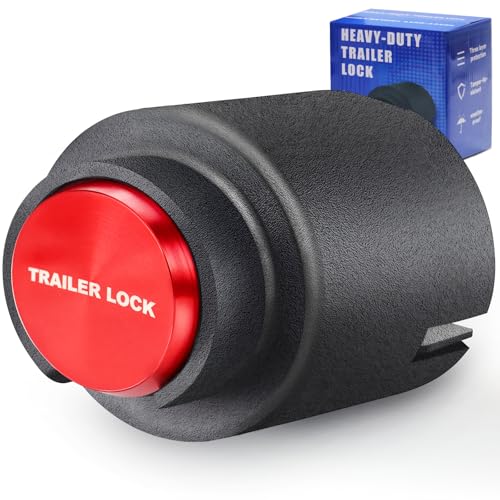
Trailer Lock Review Summary
The Universal Trailer Lock makes sense for buyers who care more about deterrence and coverage than a minimal, low-profile lock body.
Its strongest appeal is the combination of compatibility with common coupler sizes, a hardened steel construction path, and a design that hides and shields the vulnerable areas of the coupler.
That makes it a strong fit for utility trailers, cargo trailers, and owners who leave a trailer parked outdoors or in shared lots.
It is not a universal solution in the literal sense, though, so the compatibility note matters.
If your coupler has an unusual top structure or square geometry, this is the kind of product you should verify carefully before buying.
Review Scorecard
| Category | Score | Why it rates this way |
|---|---|---|
| Anti-theft deterrence | 9/10 | Full wrap-around coverage and hardened steel are focused on visible resistance. |
| Coupler compatibility | 8/10 | Designed for 2-5/16″, 2″, and Bulldog couplers, with a clear fit caveat. |
| Weather resistance | 8/10 | Powder-coated exterior is built for sun, rain, and snow exposure. |
| Ease of use | 8/10 | The listing says it can be installed or removed quickly. |
| Fit confidence | 7/10 | Broad coverage is useful, but special coupler shapes may not work. |
| Long-term value | 8/10 | The design favors durability and recurring outdoor use. |
Bottom line: this is a good choice if your priority is a visible, heavy-duty trailer security upgrade rather than a tiny lock you barely notice.
Key Features and Specifications of Trailer Lock
The core value proposition is simple: the Universal Trailer Lock is designed to cover the coupler more completely than a basic exposed lock.
The listing describes an adjustable slider that snugly fits the trailer tongue and a full wrap-around shape intended to protect critical areas from pry-style attacks and blunt tools.
The product is offered in different material and color options.
The silver puck lock version is steel-based and positioned as the stronger anti-drilling, anti-cutting option.
The red and black versions use aluminum alloy and lean more on visual deterrence.
That split matters because it tells you the product is not just one finish in one material; the listing is trying to serve different security and visibility priorities.
The stated compatibility covers 2-5/16″, 2″, and Bulldog couplers.
That is useful for common trailer setups, but it is also the most important boundary to understand.
The listing explicitly warns that it is not suitable for couplers with special structures or square shapes on top.
In other words, the fit range is broad, but not open-ended.
The outer surface uses a powder coating for weather resistance.
That is relevant for trailers that sit outside year-round, because a coupler lock often fails in the real world through corrosion, finish wear, or simply looking too rough to use consistently.
A lock that resists weather better is easier to keep in service and more likely to stay part of your routine.
Key listing points worth keeping in mind:
- Fits 2-5/16″, 2″, and Bulldog couplers
- Full wrap-around design to shield key trailer tongue areas
- Hardened steel construction for the silver puck lock option
- Aluminum alloy construction for the red and black puck lock options
- Powder-coated finish for outdoor weather exposure
- Quick install or removal claimed in about 30 seconds
Pros and Cons of Trailer Lock
Pros
- Strong visual deterrent from the fully covered shape
- Designed for common trailer coupler sizes
- Hardened steel option for buyers prioritizing tougher physical resistance
- Powder-coated finish should help it hold up outdoors
- Fast on-off use is appealing if you lock and unlock often
Cons
- Not a true universal fit for unusual couplers
- The listing requires you to check compatibility before purchase
- Buyers with square or special top structures may need a different lock
- Aluminum alloy color variants may appeal more for visibility than brute-force resistance
The main tradeoff is obvious: the more protective enclosure design improves deterrence, but it also makes fit verification more important.
That is a fair trade for a trailer lock, but it means careless buying can waste time.
Who Should Buy Trailer Lock?
This is a good fit for trailer owners who want a lock that looks serious and is built around broad outdoor use.
It should appeal to people securing utility trailers, enclosed trailers, or equipment trailers that spend time in driveways, lots, or job sites.
It is also a sensible pick for buyers who prefer a lock that can be applied and removed quickly.
If you lock up regularly and do not want a clunky, slow setup, the quick-install design is a meaningful convenience.
You should probably skip it if your trailer coupler has an unusual geometry, if the top has a square form, or if you do not want to measure and confirm fit first.
This is not the product to buy on autopilot.
It is for buyers who want a more confident security layer and are willing to check compatibility before ordering.
Trailer Lock Security and Fit Analysis
Full-Coverage Design
The full wrap-around body is the standout design choice here.
Instead of leaving much of the coupler exposed, the lock aims to block access to the most vulnerable points.
That matters because the obvious weakness in many trailer locks is not just the lock cylinder itself, but the access around it.
Material Choice
The listing splits the product into two security personalities: hardened steel for the silver puck lock and aluminum alloy for the red and black versions.
The steel option is the better match for buyers who value maximum resistance, while the lighter-color options may suit people who want stronger visibility as a theft deterrent.
Weather Exposure
Powder coating is not glamorous, but it is practical.
A trailer lock lives a hard life outdoors, and a finish that is designed for sun, rain, and snow is a real benefit.
If you park trailers year-round, durability against weather can matter almost as much as raw strength.
Installation Speed
The listing claims quick installation and removal within about 30 seconds.
That is useful because security gear only works well when it gets used consistently.
A lock that feels slow or awkward often ends up left off, which defeats the point.
Alternatives to Trailer Lock
If you want a different style of trailer security, the most credible alternatives are other Amazon-sold coupler and hitch lock families.
A few reasonable comparison points are Master Lock trailer locks, Trimax trailer locks, and HitchSafe coupler locks.
Master Lock is a familiar brand if you want a mainstream option with broad availability.
Trimax is often worth checking when you want a dedicated trailer-security lineup.
HitchSafe is a useful comparison when you want to compare different coupler-security layouts rather than the same full-coverage body style.
The right alternative depends on your trailer and how much coverage you want.
If your coupler shape is unusual, another design may fit better.
If your main goal is maximum visual deterrence, the Universal Trailer Lock’s fully covered style is still one of its strongest advantages.
Is Trailer Lock Worth It?
Yes, if your coupler fits. The Universal Trailer Lock is worth considering for buyers who want broad coupler compatibility, a weather-ready finish, and a more intimidating anti-theft profile than a basic exposed lock.
It is less compelling if you need a guaranteed fit for an unusual coupler shape or if you want the smallest possible lock.
But for standard trailer setups, this is a practical security upgrade with a clear purpose: make the trailer harder to tamper with and less attractive to steal.
If your coupler matches the supported sizes and you want a lock that favors coverage and durability, this is a sensible buy.
If fit is uncertain, verify that first and choose a different design only if your trailer geometry demands it.