Carbon monoxide can build up without warning, so a detector that alerts you remotely can add an important layer of protection when you are away from home. The best options combine dependable sensing with practical connectivity, clear alarms, and reliable backup power.
This roundup compares 10 detectors and connected air-quality devices across smart-home, interconnected, plug-in, and portable categories to help you choose the right fit for your space.
Best 10 Carbon Monoxide Detectors for Remote Monitoring Picks for 2026
Smart Air Quality Pick

- Monitors CO, PM2.5, VOCs, humidity, and temperature
- Sends Alexa app and Echo notifications
- Supports Alexa routines for compatible devices
Best For: Alexa households wanting connected indoor-air tracking
Whole-Home Alert Pick

- Combines smoke and CO detection
- Interconnected alarms sound together
- Uses sealed 10-year lithium batteries
Best For: Homes wanting coordinated alerts without rewiring
Gas Detection Pick
Kidde CO and Explosive Gas Alarm
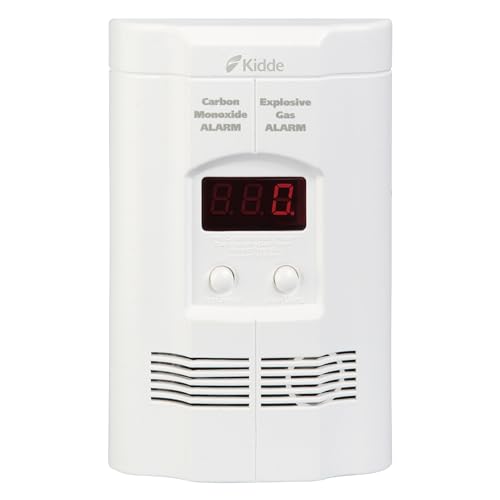
- Detects CO, natural gas, and propane
- Displays CO levels or “GAS”
- Includes 9V battery backup and 85 dB alarm
Best For: Homes wanting visible local CO and gas warnings
Remote Test Pick
X-Sense Interconnected Detector Kit

- Includes four smoke-and-CO alarms
- Remote tests or silences alarms
- LCDs show real-time CO levels and status
Best For: Larger homes needing interconnected coverage and in-home remote control
Best Smart Air-Quality Pick

- App alerts without a required subscription
- Monitors CO, humidity, and TVOC levels
- Plug-in power with AA outage backup
Best For: Connected homes and multi-property monitoring
Best Portable Battery Option
Heiman Low-Level Mini CO Alarm
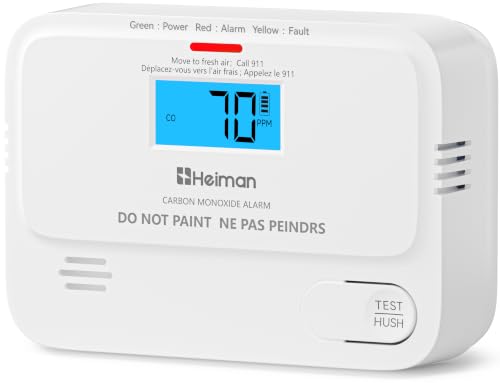
- LCD shows live CO readings
- Stores alarm events for 12 hours
- Portable AA-battery design
Best For: Travel, rentals, and outlet-free rooms
Best Straightforward Smart Pick

- Remote Kidde App alerts without a subscription
- Plug-in power with AA battery backup
- Alexa and Google Home compatible
Best For: Renters and homeowners wanting focused smart CO monitoring
Best Portable Pick

- 0–1000 PPM range with 0.3-second response
- Audible, visual, and vibration alerts
- Rechargeable USB-C handheld design
Best For: Camping, travel, and manual CO inspections
Best Simple Plug-In

- Plug-in installation for 120V outlets
- AA battery backup for outages
- 85 dB alarm with peak-level memory
Best For: Straightforward residential CO protection
Best Travel-Ready Alarm

- Compact design for home or travel
- Rotating plug and AA outage backup
- UL 2034 5th Edition tested
Best For: Travelers, renters, and everyday residential use
Smart Air Quality Pick – Alexa Air Quality Monitor
If you want carbon monoxide detectors for remote monitoring alongside broader indoor-air tracking, this Amazon Smart Air Quality Monitor is a flexible option. It measures carbon monoxide, PM2.5, VOCs, humidity, and temperature, then sends notifications through the Alexa app or announcements to compatible Echo devices.
Best For: Alexa households that want app-based air-quality updates and automation features.
Pros:
- Tracks carbon monoxide plus four other indoor-air factors.
- Provides phone notifications and Echo announcements when air quality drops.
- Can trigger compatible Alexa routines for air purifiers, fans, and dehumidifiers.
- Simple plug-in setup through the Alexa app.
Cons:
- Requires Alexa app connectivity for detailed readings and remote notifications.
- It is an air-quality monitor rather than a dedicated smoke-and-CO alarm.
This is a strong fit for connected-home users who want more than a standalone alarm. Its broad sensor coverage and Alexa routines add useful context, though shoppers seeking a traditional audible smoke-and-CO detector should consider a combination alarm instead.
Whole-Home Alert Pick – X-Sense Wireless CO 3-Pack
For shoppers comparing carbon monoxide detectors for remote monitoring, it is important to distinguish wireless interconnection from Wi-Fi access. This X-Sense three-pack wirelessly links the alarms so they sound together, but it does not provide Wi-Fi or remote phone notifications.
Best For: Homes needing coordinated smoke and CO alerts across multiple rooms without rewiring.
Pros:
- Smoke and carbon monoxide detection are combined in one alarm.
- Wireless interconnection makes all alarms sound when one detects smoke or CO.
- Sealed lithium batteries are designed to last 10 years.
- ETL listed to UL 217 and UL 2034 safety standards.
Cons:
- Does not have Wi-Fi and cannot send remote phone alerts.
- Cannot be used with a base station.
- The large mounting bracket may not suit every existing installation.
This pack emphasizes fast, whole-home audible notification rather than remote monitoring. It is a practical choice for coordinated in-home protection, but it should not be selected if app access or off-site alerts are essential.
Gas Detection Pick – Kidde CO and Explosive Gas Alarm
This Kidde plug-in alarm is a useful alternative to carbon monoxide detectors for remote monitoring when your priority is local detection of both CO and explosive gas. It has a digital display, an 85-decibel alarm, and a 9V battery backup, but the supplied features do not indicate app connectivity or remote alerts.
Best For: Homes wanting plug-in CO and natural-gas or propane detection with a display.
Pros:
- Detects carbon monoxide and explosive gas, including natural gas and propane.
- Digital display shows CO levels or “GAS” when explosive gas is detected.
- 85-decibel alarm provides a loud local warning.
- 9V battery backup maintains protection during a power outage.
Cons:
- No remote-monitoring or phone-notification capability is listed.
- Requires access to a standard 120V outlet for primary power.
The display and dual-gas coverage make this a particularly informative local alarm. Choose it for visible readings and outlet-based installation; choose a connected product if you need to check conditions while away from home.
Remote Test Pick – X-Sense Interconnected Detector Kit
This X-Sense kit is one of the more relevant choices for carbon monoxide detectors for remote monitoring because it includes four interconnected alarms and an RC01 Pro remote control. The remote can test or silence the alarms, while the detectors’ LCD displays show real-time CO levels, battery status, and working status.
Best For: Larger homes that want interconnected smoke-and-CO alarms with remote test and silence control.
Pros:
- Includes four combination smoke and carbon monoxide alarms.
- RC01 Pro remote control supports remote testing and silencing.
- LCD displays provide real-time CO readings and status information.
- Sealed batteries are designed for a 10-year life, with no rewiring required.
Cons:
- The remote control handles testing and silencing, not stated phone or Wi-Fi notifications.
- The kit is larger and more involved than a single plug-in alarm.
This bundle adds convenient remote control within the home while preserving whole-home audible alerts through wireless interconnection. It is a strong choice for multi-room coverage, but shoppers seeking off-site monitoring should verify connectivity expectations before buying.
Best Smart Air-Quality Pick – Kidde Smart CO + IAQ Detector
The Kidde COPDLQW is a strong choice among carbon monoxide detectors for remote monitoring when you also want broader indoor-air insights. It sends app alerts without a subscription, monitors CO and selected air-quality conditions, and includes battery backup for outages.
Best For: Connected homes, wellness-focused households, and people monitoring more than one property.
Pros:
- Real-time Kidde app alerts when you are home or away, with no subscription required.
- Tracks humidity, TVOC levels, and indoor-air-quality trends in addition to CO.
- Plug-in design with two AA backup batteries and a rotating plug for flexible placement.
- Provides low-level CO alerts and a separate dangerous-level alarm pattern.
Cons:
- Advanced IAQ trends and personalized insights require the optional $1.99-per-month subscription.
- Requires 2.4 GHz Wi-Fi for connected notifications.
With UL 2034 5th Edition testing, ETL listing, a 10-year limited warranty, and Alexa and Google Home compatibility, this model is a feature-rich option for remote CO awareness and indoor-air monitoring.
Best Portable Battery Option – Heiman Low-Level Mini CO Alarm
The Heiman HM-735ESY is a compact, battery-powered alternative for shoppers seeking carbon monoxide detectors for remote monitoring in the sense of checking alarm memory after being away. Its LCD shows live readings, while the 12-hour alarm memory can indicate a missed CO event when you return.
Best For: Renters, travelers, vacation homes, RVs, and rooms without a convenient electrical outlet.
Pros:
- Displays readings from 20 to 999 ppm and provides a graded low-level warning system.
- 12-hour alarm memory can help reveal missed CO events.
- Works on two replaceable AA batteries and can sit on a tabletop or mount on a wall.
- Compact, lightweight design is convenient for travel and temporary placements.
Cons:
- Does not provide smartphone or away-from-home app notifications.
- Battery-powered only; it cannot plug into an outlet or household wiring.
- Performance is specified for temperatures from 40°F to 100°F.
This UL 2034 5th Edition-certified alarm favors portability and visible readings over true remote connectivity. It is useful for detecting and reviewing alarms, but shoppers needing live alerts away from home should consider a connected model.
Best Straightforward Smart Pick – Kidde Smart CO Detector
The Kidde COPDW is a focused option for carbon monoxide detectors for remote monitoring, delivering Kidde App notifications when you are home or away. It keeps the feature set centered on CO detection while adding a digital backlit display, smart-home support, and battery backup.
Best For: Homeowners and renters who want app-based CO alerts without paying a required subscription.
Pros:
- Sends real-time alerts through the Kidde App with no subscription required.
- Plug-in installation includes two AA batteries for protection during power outages.
- Compatible with Alexa-enabled devices and Google Home.
- Uses an 85-dB alarm and includes a digital backlit display.
Cons:
- Requires 2.4 GHz Wi-Fi for remote notifications.
- Provides CO monitoring but does not include the additional IAQ measurements found on the COPDLQW.
Tested to UL 2034 5th Edition standards, ETL listed, and backed by a 10-year limited warranty, this is a practical smart alarm for users who want remote CO notifications without extra air-quality features.
Best Portable Pick – TOPTES CT-580
If you need carbon monoxide detectors for remote monitoring in changing locations, the TOPTES CT-580 is a practical handheld option. Its electrochemical sensor detects CO from 0 to 1000 PPM, responds within 0.3 seconds, and provides audible, visual, and vibration alerts for hands-on inspections.
Best For: Camping, travel, industrial checks, and users who want a portable detector with vibration alerts and a color display.
Pros:
- Fast response and a 0–1000 PPM detection range
- Audible, visual, and vibration alarm modes activate together
- Rechargeable USB-C design with flashlight and adjustable display brightness
- Includes a protective case and supports alarm history and calibration settings
Cons:
- It is a manual inspection tool rather than a permanently installed household alarm
- Requires charging and periodic user checks
The CT-580 stands out when portability and immediate, multi-mode alerts matter more than unattended whole-room monitoring. Its expanded controls also make it suitable for more technical inspection work.
Best Simple Plug-In – Kidde KN-COB-DP2
For straightforward carbon monoxide detectors for remote monitoring around the home, the Kidde KN-COB-DP2 offers plug-in operation with battery backup. It connects to a standard 120V outlet, uses two AA batteries during outages, and sounds an 85-decibel alarm when CO is detected.
Best For: Homeowners and renters who want simple outlet-powered CO protection with outage coverage and basic status features.
Pros:
- Installs by plugging into a standard 120V outlet
- Two-AA battery backup maintains protection during power outages
- 85-decibel alarm provides a loud audible warning
- Peak-level memory and Test-Hush button support quick checks
Cons:
- Offers local alarm and memory features rather than app-based remote notifications
- Requires a nearby outlet for normal operation
This Kidde model is a sensible choice for uncomplicated residential monitoring. It provides useful backup power and memory functions, but shoppers seeking phone alerts or connected monitoring will need to look elsewhere.
Best Travel-Ready Alarm – Kidde COP
The Kidde COP is a compact choice for carbon monoxide detectors for remote monitoring at home, in apartments, or while traveling. It plugs into 120V AC, includes two AA backup batteries, and uses an 85-decibel alarm plus an LED warning light to signal detected CO.
Best For: Renters, homeowners, pet owners, and travelers who want a compact plug-in detector for homes, hotels, or vacation rentals.
Pros:
- Rotating plug fits vertical or horizontal outlets
- AA battery backup supports detection during power outages
- Compact design is suitable for travel
- UL 2034 5th Edition tested, ETL Listed, and covered by a 10-year limited warranty
Cons:
- Provides audible and visual local alerts rather than phone-based remote notifications
- Its plug-in format depends on access to an electrical outlet
With its rotating plug, compact build, and travel-oriented design, the Kidde COP is more flexible than a typical fixed plug-in alarm. It is a strong fit for portable local protection, provided remote smartphone alerts are not a requirement.
How We Picked the Best Carbon Monoxide Detectors for Remote Monitoring
We focused on detectors that can support remote awareness directly or through a connected smart-home ecosystem, while also considering core safety features. Our comparison weighs alarm loudness, power options, battery backup, display or status indicators, connectivity, installation style, sensor coverage, and portability.
Because product capabilities vary, check whether a model sends alerts through Wi-Fi, requires a compatible hub or app, or provides only local warnings. A device that measures broader indoor-air conditions may be useful, but it should not replace a certified carbon monoxide alarm where one is required.
Quick Comparison
| Type | Best for | Features to prioritize |
|---|---|---|
| Smart detector | Remote alerts and connected homes | Reliable app notifications, Wi-Fi or hub compatibility, battery backup |
| Interconnected detector | Whole-home local coverage | Wireless linking, multiple alarms, simple testing |
| Plug-in detector | Everyday room protection | Accessible outlet, backup battery, digital display or status lights |
| Combination detector | Smoke, CO, or gas coverage | Separate alarm indications, suitable sensor coverage, clear maintenance alerts |
| Portable detector | Travel, RVs, and temporary spaces | Rechargeable battery, visible and audible alarms, compact design |
Key Buying Factors for Carbon Monoxide Detectors for Remote Monitoring
Connectivity and Alert Delivery
Confirm how remote notifications work and whether the device remains useful during an internet outage. Look for an app with timely push alerts, low-battery warnings, test notifications, and clear event history.
Power and Placement
Plug-in models are convenient, but battery backup matters during outages. Battery-only units offer flexible placement. Install alarms according to the manufacturer’s instructions and local safety guidance, especially near sleeping areas and fuel-burning appliances.
Alarm Clarity and Maintenance
An 85 dB alarm, bright status indicators, or a digital reading can make local warnings easier to notice. Check battery replacement intervals, sensor end-of-life notifications, test procedures, and whether replacement parts are readily available.
Coverage and Certifications
Choose a model appropriate for each room or level rather than relying on one detector for an entire home. Verify current safety certifications and review the installation requirements before purchase.
Who Should Buy Which Carbon Monoxide Detectors for Remote Monitoring?
Choose a smart CO detector if you want app-based alerts while traveling or managing a second home. Choose an interconnected kit for a larger home where an alarm in one area should trigger others. Choose a plug-in model for straightforward protection with minimal installation. Choose a combination unit if you also need smoke, natural-gas, or propane monitoring. Choose a portable detector for RV trips, hotels, workshops, or temporary accommodations.