Carbon monoxide is invisible and odorless, so a reliable detector is an essential layer of protection for homes with fuel-burning appliances, fireplaces, garages, or attached living spaces. The best option depends on more than alarm volume: placement, power source, display features, and replacement timing all matter.
We compared 10 carbon monoxide detectors under $300 to help you choose a practical alarm for bedrooms, hallways, rental properties, travel, and whole-home coverage. The selection includes standalone CO alarms, smoke-and-CO combinations, and models that also detect combustible gases.
Best 10 Carbon Monoxide Detectors Under 300 Picks for 2026
Plug-In Digital Monitor

- Digital CO level display
- 9V backup for outages
- 85 dB alarm with peak memory
Best For: Plug-in monitoring with visible readings
Sealed 2-in-1 Protection

- Smoke and CO detection
- 10-year sealed lithium battery
- LCD display and 85 dB alarm
Best For: Low-maintenance standalone coverage
Reliable Outlet Backup
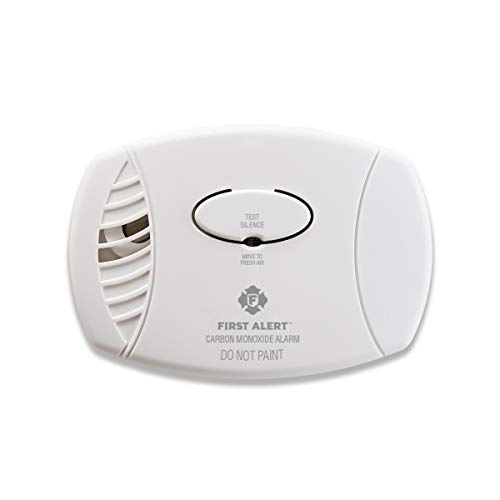
- Plug-in with 9V backup
- Electrochemical CO sensor
- End-of-life warning chirp
Best For: Simple outlet-based CO monitoring
Portable Battery Monitor
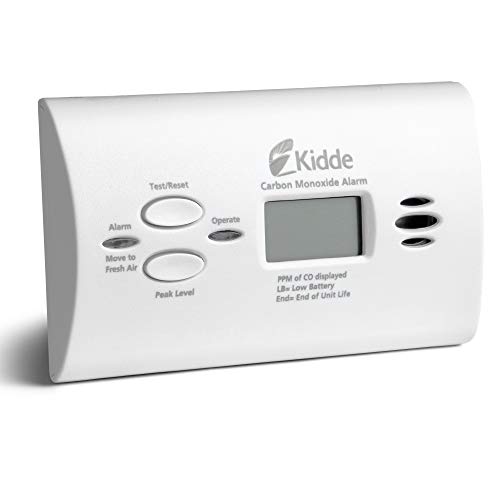
- Runs on two included AA batteries
- Wall-mount or tabletop placement
- Display and peak-level memory
Best For: Flexible placement without an outlet
Portable Plug-In Pick
Siterlink 10-Year Backup CO Detector

- Plug-in operation with 10-year battery backup
- Electrochemical sensor and soft status light
- Foldable, travel-friendly compact design
Best For: Homes, bedrooms, hotels, and travel
Trusted Battery Value
- Battery powered for outage monitoring
- 85-decibel audible alarm
- Replaceable battery and end-of-life alert
Best For: Simple whole-home CO alarm coverage
Digital Display Choice
Heiman Low-Level CO Alarm 3-Pack

- Three alarms with sealed 10-year batteries
- LCD readings and 30 ppm early warning
- Tabletop or wall mounting with alarm memory
Best For: Multi-room, rental, RV, and travel coverage
Reliable Plug-In Protection

- Standard 120V plug-in installation
- Two-AA battery backup
- 85 dB alarm with peak memory
Best For: Homes wanting simple outlet-powered CO protection
Long-Term Battery Convenience

- Sealed 10-year lithium battery
- Digital display updates every 15 seconds
- Wall or tabletop placement
Best For: Low-maintenance CO monitoring with visible readings
Dual Gas Monitoring
Kidde CO and Explosive Gas Alarm
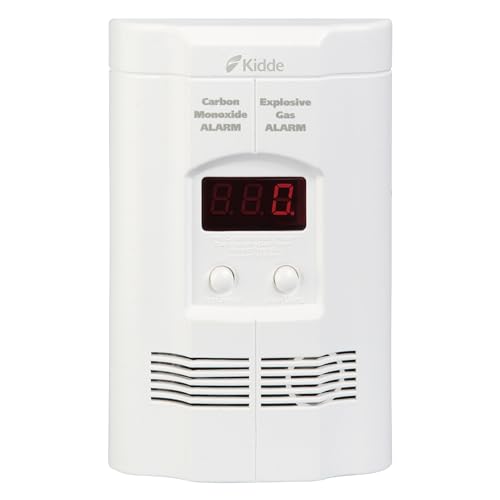
- Detects CO, natural gas, and propane
- Digital display shows CO levels or “GAS”
- 9V backup with 85 dB alarm
Best For: Gas-equipped homes wanting combined hazard monitoring
Plug-In Digital Monitor – Kidde KN-COPP-3
For shoppers comparing carbon monoxide detectors under 300, the Kidde KN-COPP-3 is a practical plug-in option with a digital display and battery backup. It installs in a standard 120V outlet and continues monitoring during a power outage with its included 9V battery.
Best For: Homes that want a plug-in alarm with visible CO readings and peak-level memory.
Pros:
- Digital LED display shows the detected carbon monoxide level.
- 9V battery backup supports monitoring during power failures.
- 85-decibel alarm and LED status indicators provide clear alerts.
- Can be plugged in or wall-mounted using the included hardware.
Cons:
- Requires access to a standard 120V outlet.
- Uses a replaceable 9V battery rather than a sealed battery.
- Provides CO detection only, not smoke detection.
Its combination of straightforward installation, digital readings, and peak-level memory makes this Kidde a useful choice for buyers who prefer more information than a basic alarm provides.
Sealed 2-in-1 Protection – X-Sense SC07
Among carbon monoxide detectors under 300, the X-Sense SC07 stands out by combining smoke and CO detection in one standalone unit. Its sealed lithium battery is designed to last up to 10 years, while the included mounting hardware supports installation without rewiring.
Best For: Buyers seeking a low-maintenance smoke and carbon monoxide alarm for a wall or ceiling.
Pros:
- Combines photoelectric smoke detection with electrochemical CO detection.
- Built-in sealed battery is designed for up to 10 years of operation.
- Includes an LCD display and an 85-decibel alarm.
- Certified to UL 217 and UL 2034 standards according to the supplied notes.
Cons:
- This basic SC07 model does not support wireless interconnection, Wi-Fi, or a base station.
- The sealed battery is not user-replaceable.
- It is a standalone unit rather than a hardwired alarm.
The SC07 is a strong fit for anyone who wants combined smoke and CO coverage without routine battery changes, provided wireless connectivity is not a requirement.
Reliable Outlet Backup – First Alert CO606
For shoppers evaluating carbon monoxide detectors under 300, the First Alert CO606 offers simple outlet-powered protection with a 9V battery backup. Its electrochemical sensor, single test/silence button, and loud alarm keep operation straightforward.
Best For: Homes wanting an easy-to-use plug-in CO alarm with backup power and end-of-life notification.
Pros:
- Works with a standard outlet and includes 9V battery backup.
- Electrochemical sensor detects carbon monoxide levels accurately regardless of room placement, according to the supplied notes.
- 85-decibel alarm provides a loud warning.
- End-of-life chirp indicates when replacement is needed.
Cons:
- Requires a wall outlet for primary operation.
- Does not include a digital CO display or smoke detection.
- Backup battery is replaceable and requires periodic attention.
The CO606 keeps the feature set focused on dependable plug-in CO monitoring, making it a sensible choice for buyers who value uncomplicated operation and a clear replacement signal.
Portable Battery Monitor – Kidde KN-COPP-B-LPM
The Kidde KN-COPP-B-LPM is a flexible option among carbon monoxide detectors under 300 because it runs on two included AA batteries rather than a wall outlet. Its portable design can be mounted on a wall or placed on a tabletop, making it convenient for locations without nearby power.
Best For: Portable or outlet-free CO monitoring with a digital display and peak-level memory.
Pros:
- Battery-powered operation continues during power failures.
- Can be wall-mounted or placed on a tabletop.
- Electrochemical sensor and 85-decibel alarm support CO alerts.
- Digital display, peak memory, and test-hush button add useful monitoring controls.
Cons:
- Requires periodic replacement of two AA batteries.
- Does not provide smoke detection.
- The 10-year warranty applies to the alarm, not battery performance.
This Kidde model is well suited to buyers who need flexible placement and informative controls, although its replaceable batteries require more maintenance than a sealed-battery alternative.
Portable Plug-In Pick – Siterlink 10-Year Backup CO Detector
For shoppers comparing carbon monoxide detectors under 300, the Siterlink offers a convenient plug-in design with battery backup. Its electrochemical sensor, foldable plug, and compact size make it practical for bedrooms, travel, hotels, or areas where simple setup matters.
Best For: Buyers who want plug-and-play protection with backup power and a travel-friendly form factor.
Pros:
- Plugs into a standard outlet and includes a 10-year battery backup for outages.
- Electrochemical sensor is designed for accurate detection while minimizing false alarms.
- Foldable plug and compact build make it easy to pack for travel.
- Soft breathing-style green indicator is designed not to disturb sleep.
Cons:
- Requires access to a standard electrical outlet for its primary power source.
- It does not provide a digital CO level display in the supplied specifications.
The Siterlink is a straightforward choice when you want outlet-powered monitoring without giving up outage protection. Its compact design also adds flexibility for temporary stays and travel.
Trusted Battery Value – First Alert CO400 Alarm
Among carbon monoxide detectors under 300, the First Alert CO400 is a simple battery-operated option for continuous monitoring during power failures. It combines an electrochemical sensor with an 85-decibel alarm, replaceable battery, and end-of-life warning.
Best For: Households seeking a basic, established-brand alarm for bedrooms and multiple levels of the home.
Pros:
- Battery-powered operation continues monitoring during a power outage.
- Electrochemical sensor is designed to detect CO levels regardless of room placement.
- Loud 85-decibel alarm sounds when CO reaches dangerous levels.
- Includes replaceable battery, end-of-life signal, and a five-year limited warranty.
Cons:
- Provides audible alerts but no digital readout in the supplied specifications.
- Users must replace the battery when needed.
The CO400 keeps the feature set focused on essential detection and audible warning. Its replaceable battery and end-of-life chirp are useful for routine maintenance, especially when installing alarms throughout a home.
Digital Display Choice – Heiman Low-Level CO Alarm 3-Pack
For shoppers evaluating carbon monoxide detectors under 300, this Heiman three-pack adds features for monitoring low-level readings and missed events. Each unit has a 10-year sealed lithium battery, LCD display, graded alerts, and tabletop or wall-mount installation.
Best For: Homes, rentals, RVs, and travelers who want multiple alarms with visible CO readings and low-level warnings.
Pros:
- Three compact alarms use sealed 10-year lithium batteries with no wiring required.
- LCD displays readings from 20 to 999 ppm and includes a 12-hour alarm memory.
- Provides a 30 ppm early warning alongside an 85-decibel danger alarm.
- Supports tabletop or wall mounting and includes a test/hush button.
Cons:
- The sealed battery is non-replaceable and the alarm cannot be plugged in.
- Performance is specified for 40°F to 100°F and is not intended for garages or direct vehicle exhaust exposure.
- The initial activation includes an automatic 100-second warm-up cycle.
The Heiman pack is the most information-focused option here, with visible readings, low-level alerts, and memory features. Its three-unit format suits multi-room coverage, though buyers should follow the stated temperature and placement limits.
Reliable Plug-In Protection – Kidde Plug-In CO Detector
For shoppers comparing carbon monoxide detectors under 300, this Kidde plug-in model offers straightforward installation and backup protection. It connects to a standard 120V outlet, while two AA batteries help it continue operating during a power outage.
Best For: Homes seeking an easy-to-install, plug-in carbon monoxide detector with battery backup.
Pros:
- Plugs into a standard 120V outlet without complex installation.
- Two-AA battery backup provides protection during power failures.
- Features an 85-decibel alarm, peak-level memory, and a test-hush button.
Cons:
- It does not include a digital display for viewing CO levels.
- Backup batteries require eventual replacement.
This is a practical choice when you want outlet-powered CO monitoring with a simple status-light design. Its lack of a digital display may matter if you prefer to see measured levels.
Long-Term Battery Convenience – Kidde 10-Year CO Detector
Among carbon monoxide detectors under 300, this Kidde model stands out for its sealed 10-year lithium battery and digital display. It needs no wiring and can be mounted on a wall or placed on a tabletop, including during a power failure.
Best For: Buyers who want portable, low-maintenance CO monitoring with visible readings.
Pros:
- Sealed 10-year lithium battery eliminates routine battery replacement.
- Digital display updates every 15 seconds and shows CO presence levels.
- Electrochemical sensor, 85-decibel alarm, peak-level memory, and UL certification.
Cons:
- The sealed battery means the detector is replaced rather than fitted with a new battery when depleted.
- It is battery powered rather than continuously powered from an outlet.
Choose this model if convenience and display feedback are more important than plug-in operation. Its portable wall-or-tabletop design also makes placement flexible.
Dual Gas Monitoring – Kidde CO and Explosive Gas Alarm
For shoppers looking beyond basic carbon monoxide detectors under 300, this Kidde alarm also monitors explosive natural gas and propane. It plugs into a standard 120V outlet, includes a 9V battery backup, and uses a digital display to show CO levels or “GAS” when explosive gas is detected.
Best For: Homes using natural gas or propane that want combined CO and explosive-gas alerts.
Pros:
- Detects carbon monoxide plus explosive natural gas and propane.
- Digital display shows CO levels or “GAS” for explosive gas detection.
- Includes 9V battery backup, an 85-decibel alarm, and peak-level memory.
Cons:
- It requires a nearby 120V outlet for normal operation.
- The 9V backup battery requires eventual replacement.
This model provides broader coverage than a CO-only detector, making it a useful option for homes with gas appliances or propane use. The display adds useful information beyond the audible alarm.
How We Picked the Best Carbon Monoxide Detectors Under 300
We focused on the features that affect everyday safety and usability: power source, backup power, alarm volume, digital readouts, status indicators, test and reset controls, battery life, portability, and sensing coverage. We also considered whether each detector is designed for a specific installation style, such as a wall outlet, tabletop placement, or battery-only use.
The list includes established alarm formats rather than treating one design as universally best. Plug-in models can provide convenient continuous power, while battery-powered units are easier to position where outlets are unavailable. Combination alarms and explosive-gas detectors may suit households that want broader hazard coverage in one device.
Quick Comparison
- Best for outlet installation: Plug-in alarms with battery backup.
- Best for flexible placement: Battery-powered or portable CO detectors.
- Best for visibility: Models with digital displays and LED status indicators.
- Best for broader coverage: Smoke-and-CO combination or combustible-gas alarms.
- Best for reduced maintenance: Long-life battery models, provided the full unit is replaced on schedule.
Key Buying Factors for Carbon Monoxide Detectors Under 300
Power and Backup
A plug-in detector is convenient, but it should have battery backup if you want protection during a power outage. Battery-only models are more flexible, although you must check battery condition regularly. Pay attention to whether the battery is replaceable and how the manufacturer specifies end-of-life replacement.
Display and Alerts
A digital display can show current readings or peak levels, making it easier to understand what the detector has sensed. LED indicators provide quick status checks, while an audible alarm is critical for waking occupants. An 85 dB alarm is common among the models in this roundup, but placement still affects how well it can be heard.
Coverage and Installation
Choose locations according to the manufacturer’s instructions, generally near sleeping areas and on each level where protection is needed. A portable unit can supplement fixed alarms, but it should not replace a properly planned home-wide setup. Combination units may save space, but verify that their smoke or gas-sensing features match your needs.
Maintenance and Replacement
Test every alarm regularly, keep vents clear, replace batteries when indicated, and never ignore a low-battery or end-of-life warning. CO detectors have a limited service life, so record the installation date and replace the entire unit when required.
Who Should Buy Which Carbon Monoxide Detectors Under 300?
Choose a plug-in model with backup power if you want simple installation near a bedroom or hallway outlet. Choose a battery-powered detector for rooms without convenient outlets, rentals, travel, or supplemental placement. Choose a digital-display model if visible readings and peak-level information are important to you. Choose a combination smoke-and-CO alarm if you want to reduce the number of devices on the wall. Finally, consider a combustible-gas model only if natural gas or propane detection is relevant to your home and the product’s coverage suits your appliances.