The best key cabinets make it easier to organize, label, and secure keys without wasting time searching for the right one. This roundup compares 10 options ranging from compact combination-lock boxes to large commercial cabinets.
We evaluated capacity, locking methods, mounting design, labeling systems, and practical features such as drop slots and resettable combinations to help you choose the right fit for your space.
Best 10 Key Cabinets Picks for 2026
Compact Steel Pick

- Stores up to 48 keys
- Includes tags, locks, and mounting hardware
- Compact steel wall-mount design
Best For: Homes and small offices needing labeled key storage
Combination-Access Choice

- Stores up to 40 keys and many fobs
- Uses a resettable three-digit combination
- Includes writable color-coded tags
Best For: Shared home, office, and property access
High-Capacity Workhorse
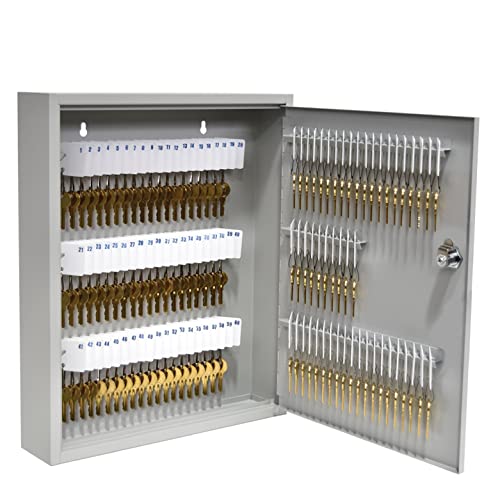
- Organizes up to 110 keys
- Includes numbered write-on tags
- Uses welded steel construction
Best For: Busy commercial sites managing large key collections
Advanced Access Pick

- Stores up to 71 keys
- Includes keypad, LED light, and silent mode
- Uses a three- to eight-digit code with backup keys
Best For: Businesses needing high-capacity electronic key access
Large-Capacity Pick

- Stores up to 60 keys on six adjustable racks.
- Uses a resettable 4-digit combination lock.
- Includes numbered and color-coded key labels.
Best For: Offices, schools, warehouses, and larger shared key collections
Maximum-Capacity Option

- Provides 100 numbered key hooks.
- Uses steel construction with a pry-resistant door.
- Includes adjustable shelves, tags, and mounting hardware.
Best For: Hotels, property managers, and high-volume business key storage
Compact Choice

- Holds up to 20 keys in a compact cabinet.
- Features a resettable 3-digit combination lock.
- Includes hooks, number stickers, and four-color tags.
Best For: Homes and small offices with modest key collections
Best High-Capacity Pick

- Holds up to 200 keys
- Numbered hooks, tags, and tracking log included
- Heavy-duty wall-mounted steel cabinet
Best For: Large offices, hotels, dealerships, and property managers
Best Compact Combination-Lock Pick

- Stores up to 60 keys
- Resettable three-digit combination lock
- Compact indoor wall-mounted design
Best For: Schools, homes, offices, and real estate agencies
Best for Larger Car Keys

- Wider spacing for bulky car keys
- Three-digit combination lock
- Color-coded writable tags and numbered racks
Best For: Dealerships, fleets, repair shops, and offices
Compact Steel Pick – Amazon Basics 48-Key Cabinet
If you need straightforward key cabinets for a home office, school, business, or leasing office, this Amazon Basics model offers organized storage for up to 48 keys. Its wall-mountable steel design includes color-coded tags and the hardware needed for installation.
Best For: Homes and small offices that need compact, labeled key storage with a traditional key lock.
Pros:
- Stores up to 48 keys with included hooks and blank tags
- Durable steel construction with a black finish
- Includes two entry keys and mounting hardware
- Compact wall-mountable design
Cons:
- Requires a physical key to open
- May not accommodate unusually bulky keys or fobs comfortably
This is a practical choice when compact size and simple organization matter more than high capacity or combination access.
Combination-Access Choice – KYODOLED 40-Key Box
Among key cabinets, the KYODOLED 40-key box stands out for its resettable combination lock. The wall-mounted steel cabinet provides labeled, color-coded storage for standard keys and many car key fobs without requiring users to share a physical cabinet key.
Best For: Families, property managers, and small businesses that want shared access through a customizable three-digit code.
Pros:
- Holds up to 40 keys, with capacity varying by key size
- Resettable three-digit combination offers keyless access
- Writable, color-coded tags support quick identification
- Wall-mounting helps free desk and drawer space
Cons:
- Combination-setting procedure requires following the included steps carefully
- Three-digit codes provide less flexibility than longer electronic codes
The KYODOLED is a useful middle-capacity option when multiple people need access and managing a spare cabinet key would be inconvenient.
High-Capacity Workhorse – STEELMASTER 110-Key Cabinet
For busy workplaces that manage many keys, this STEELMASTER cabinet provides substantially more capacity than compact key cabinets. It holds up to 110 keys in a hook-style layout and includes numbered write-on tags for faster identification.
Best For: Banks, casinos, retail stores, restaurants, and offices with large daily key-management needs.
Pros:
- Stores up to 110 keys
- Includes numbered write-on tags for organization
- Welded 22-gauge steel supports regular use
- Scratch-resistant powder-coated finish and piano-hinged door
Cons:
- Large 14-by-17-inch footprint needs more wall or placement space
- Uses a traditional key lock rather than combination access
- Supplied notes list it as freestanding, so placement and mounting plans should be checked
This cabinet makes the most sense when capacity and clear numbering are priorities for a high-volume key room or service area.
Advanced Access Pick – XDeer 71-Position Key Box
This XDeer model adds electronic access and visibility features to high-capacity key cabinets. It stores up to 71 keys, supports a custom three- to eight-digit passcode, and includes backup keys, a backlit keypad, interior LED lighting, and silent operation.
Best For: Hotels, property managers, dealerships, repair shops, schools, and businesses handling many keys in variable lighting.
Pros:
- Provides storage for up to 71 keys
- Offers electronic combination access plus physical backup keys
- Backlit keypad and interior LED help with low-light use
- Heavy-duty 16-gauge steel construction with a scratch-resistant powder coat
Cons:
- At 12.4 pounds, it is heavier than simpler key cabinets
- Electronic features require the included adapter and data cable setup
- May be more functionality than needed for basic household storage
The XDeer is the most feature-rich option here, particularly for organizations that need larger capacity, code-based access, and easier operation in dim environments.
Large-Capacity Pick – Uniclife 60-Key Steel Cabinet
For offices, schools, repair shops, and other locations managing a sizable key collection, this Uniclife cabinet is one of the more practical key cabinets to consider. It holds up to 60 keys, uses six adjustable racks, and includes numbered labels and color-coded tags to make daily access easier.
Best For: Homes, offices, schools, warehouses, and businesses that need organized storage for up to 60 keys.
Pros:
- 60 hooks provide substantial storage capacity.
- Resettable 4-digit combination lock offers 10,000 possible combinations, with two spare keys included.
- Steel construction, adjustable racks, numbered stickers, and five-color tags support organized key control.
- Wall-mount design includes screws and wall anchors.
Cons:
- Its 12.7-by-5.5-by-14.8-inch size may be more cabinet than smaller households need.
- It is designed for wall mounting, so installation requires a suitable wall location.
Choose this model when capacity and labeling flexibility matter more than a compact footprint. Its combination lock and structured interior make it a strong all-around option for shared key storage.
Maximum-Capacity Option – 100-Position Key Cabinet
When your key-control needs exceed the capacity of smaller key cabinets, this 100-position lock box provides room to manage a large collection in one wall-mounted unit. Numbered hooks, adjustable shelves, and included key tags help make frequently accessed keys easier to track.
Best For: Hotels, apartment buildings, gyms, body shops, valet stations, and businesses storing up to 100 keys.
Pros:
- 100 hooks accommodate extensive key collections.
- Steel construction includes a thick pry-resistant door and internal anti-theft hinge.
- Numbered hooks, adjustable numbered shelves, and key tags support organized access.
- Pre-drilled mounting holes and hardware simplify wall installation.
Cons:
- At 9.2 pounds, it is a substantial unit that needs secure wall mounting.
- The notes do not specify the number of combination digits or available combinations.
This is the capacity-focused choice for workplaces that need centralized key storage and basic physical protection. Its 100-hook layout is especially useful where a smaller cabinet would quickly become crowded.
Compact Choice – Uniclife 20-Key Steel Cabinet
If you need a straightforward way to secure a smaller key collection, this compact Uniclife model is among the more space-conscious key cabinets. It holds 20 keys, mounts to the wall, and includes a resettable 3-digit combination lock plus labeled, color-coded tags.
Best For: Homes, small offices, schools, companies, and real estate settings with up to 20 keys.
Pros:
- Compact 3-by-6.5-by-8-inch design holds up to 20 keys.
- Resettable 3-digit combination lock provides 1,000 possible combinations.
- Includes 20 hooks, number stickers, and tags in four colors for identification.
- Screws and wall anchors are included for mounting.
Cons:
- Its 20-key capacity is limited for larger organizations.
- The product is intended for indoor installation only.
- A 3-digit lock offers fewer possible combinations than the 4-digit lock on the 60-key model.
This cabinet makes sense when conserving wall space is a priority and your key collection is modest. It delivers the essential combination of wall-mounted organization, labeling, and lockable access without the bulk of a larger cabinet.
Best High-Capacity Pick – Durabox 200-Key Steel Cabinet
For businesses managing a large number of keys, this Durabox key cabinet provides 200 numbered positions in a wall-mounted steel enclosure. Matching tags, adjustable hooks, and a log sheet help keep key storage organized and trackable.
Best For: Hotels, offices, property managers, car dealerships, garages, and other high-volume key-management settings.
Pros:
- Stores up to 200 keys in a compact wall-mounted cabinet.
- Heavy-duty, powder-coated steel construction resists daily wear, rust, and corrosion.
- Includes numbered hooks, 200 blank tags, a tracking log sheet, two keys, and mounting hardware.
- Adjustable hook system supports customized organization.
Cons:
- Its large capacity and 21.6-inch height may be more than smaller households need.
- Uses a key lock, so access depends on retaining the included cabinet keys.
Choose this model when capacity and structured organization matter most. It is especially well suited to commercial environments that need many labeled keys in one durable cabinet.
Best Compact Combination-Lock Pick – Uniclife 60-Key Cabinet
This Uniclife key cabinet offers 60 positions in a compact wall-mounted design, with a resettable three-digit combination lock for keyless cabinet access. Slotted tags and numerical labeling make it practical for schools, offices, homes, and property-management use.
Best For: Indoor use in schools, homes, companies, and real estate offices that need moderate-capacity key storage.
Pros:
- Organizes up to 60 keys while taking up less wall space than larger cabinets.
- Resettable three-digit combination provides 1,000 possible code combinations.
- Includes slotted key tags with snap hooks, screws, wall anchors, and a permanent pen.
- Numerical tags make keys easier to identify at a glance.
Cons:
- Designed for indoor use only.
- The supplied notes mention 40 slotted tags, while the product details list 60 key tags, so the included tag configuration should be verified.
- Its 60-key capacity may not suit high-volume commercial operations.
This is a practical middle-ground option for buyers who want combination access without stepping up to a large commercial cabinet. Its compact size and included labeling accessories suit everyday indoor key organization.
Best for Larger Car Keys – Uniclife 32-Key Lock Box
Among key cabinets, this Uniclife model stands out for its wider spacing and combination lock, making it suitable for offices, fleets, dealerships, and repair operations handling bulkier car keys. Four fixed racks and writable, color-coded tags support quick identification.
Best For: Car dealerships, fleet teams, repair shops, warehouses, offices, and companies organizing larger key sets.
Pros:
- Holds 32 keys with wider spacing designed to accommodate bulky car keys.
- Three-digit combination lock offers 1,000 possible combinations.
- Four numbered racks and 32 writable tags in four colors simplify identification.
- Steel body and built-in door magnet support secure, tidy storage.
Cons:
- Capacity is limited to 32 key positions.
- The color-coded tags may require additional labeling for more detailed tracking.
- Its combination-lock design may not suit buyers who prefer a traditional key lock.
This cabinet is a strong fit when standard key hooks feel cramped, particularly for car keys and other larger sets. Its combination access and visual labeling make it convenient for shared workplace use.
How We Picked These Key Cabinets
We focused on the features that matter most in everyday key control: usable capacity, cabinet construction, lock type, wall-mount practicality, labeling, and access speed. The selection includes small cabinets for homes and small offices, mid-size boxes for property managers and service teams, and high-capacity models for hotels, fleets, and valets.
We also considered whether each cabinet supports numbered hooks or writable tags, since clear identification is essential when several keys look alike. Combination locks can simplify shared access, while keyed locks may provide more traditional control.
Quick Comparison
| Best For | What to Look For |
|---|---|
| Home or small office | 20 to 48 hooks, compact wall-mounted design, simple lock |
| Rental properties and service teams | 40 to 71 positions, writable tags, combination access |
| Medium businesses | 60 to 110 positions, steel construction, organized numbering |
| Hotels, fleets, and valets | 100 to 200 positions, durable cabinet, drop slot, clear indexing |
Key Buying Factors for Key Cabinets
Capacity and Available Space
Choose a cabinet with enough hooks for your current keys plus some room for growth. A cabinet that is too small quickly becomes difficult to manage, while an oversized model may consume unnecessary wall space. Measure the mounting area, including clearance for opening the door.
Locking Method
Keyed cabinets are straightforward and familiar, but the key must be available when access is needed. Combination locks work well for shared teams and can eliminate spare-key management. For higher-control environments, consider who can change or reset access codes and whether the cabinet offers a secondary locking option.
Construction and Installation
Steel cabinets generally provide better resistance to dents and tampering than lightweight alternatives. Look for a rigid door, secure hinges, and suitable mounting holes. Use appropriate wall hardware for the cabinet’s weight and the surface where it will be installed.
Labels, Drop Slots, and Daily Workflow
Numbered hooks and writable tags reduce mistakes and make audits faster. A drop slot is useful when users need to return keys without opening the main cabinet. Before buying, consider whether the slot accepts your key rings and whether the layout leaves enough room to remove bulky keys.
Who Should Buy Which Key Cabinets?
For a home, small office, or rental owner, a compact 20- to 48-position cabinet is usually the most practical choice. Choose a combination model if several people need access, or a keyed model if one administrator controls the keys.
Property managers, contractors, and medium-sized businesses should consider 60- to 110-position cabinets with clear tags and a resettable combination. Hotels, vehicle fleets, and valet operations will benefit from high-capacity cabinets, especially models with 100 or more positions and a drop slot.
Finally, leave expansion room whenever possible. Consistent labels, a written key log, and limited access will improve security regardless of which cabinet you choose.