The right window alarm can give caregivers an earlier warning when a child, senior, or person with dementia opens a monitored exit. The best options balance dependable detection with controls that are simple to install and use.
This roundup compares 10 window and door alarms across alert types, sound levels, chimes, caregiver-friendly features, and flexible home coverage.
Best 10 Window Alarms for Caregivers Picks for 2026
Best Expandable Coverage
Three-Sensor Two-Receiver Caregiver Pager

- Three sensors and two receivers for broader coverage
- Nearly 260-foot wireless range
- 58 melodies, five volume levels, and LED alerts
Best For: Larger homes needing alerts in multiple locations
Best Standalone Loud Alarm
Sanjie Five-Pack Window Alarm Sensors

- Five independent contact sensors
- 125 dB, 100 dB, and chime modes
- Adhesive installation with stated 13-month battery life
Best For: Simple indoor monitoring across several access points
Best Compact Receiver Kit
Three-Sensor One-Receiver Pager

- Three sensors paired with one receiver
- Nearly 260-foot range and LED notification
- 58 melodies with five volume settings
Best For: Smaller homes using one central caregiver station
Best Smart Monitoring
PILSAMAS Wi-Fi Caregiver Alarms

- Four sensors with app alerts and history logs
- 328-foot range and receiver ID display
- No mandatory subscription; supports schedules and family sharing
Best For: Families needing remote monitoring and activity tracking
Best All-Around Coverage
Philips 4-Pack Window and Door Alarm

- Four alarms for multiple entry points
- Selectable 120dB alarm or chime
- Adhesive installation with included batteries
Best For: Simple multi-window and door monitoring
Best for Caregiver Alerts
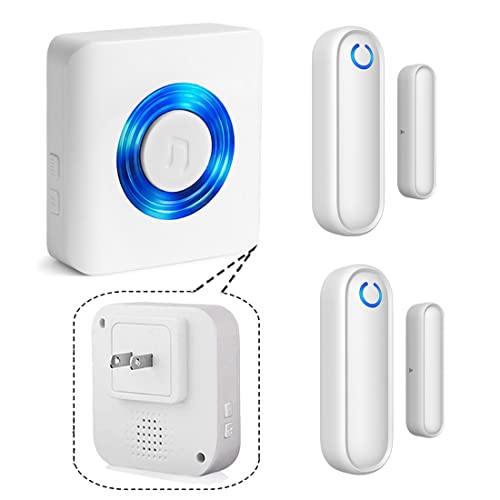
- Two sensors with one plug-in receiver
- 260-foot listed wireless range
- Adjustable volume, melodies, and LED alert
Best For: Caregivers needing alerts from another room
Best for Broad Indoor Coverage
UltraPro 6-Pack Window and Door Alarm

- Six alarms cover many indoor openings
- Selectable 120dB siren or chime
- No app or monthly fees required
Best For: Homes needing extensive local door and window coverage
Wide-Coverage Pick
15-Pack 90 dB Door and Window Alarms

- 15 alarms cover multiple openings
- 90 dB magnetic contact siren
- Adhesive installation; batteries not included
Best For: Caregivers monitoring many doors and windows
Compact Value Pick

- Four compact wireless alarms
- 90 dB magnetic sensor alert
- Portable design with adhesive mounting
Best For: Caregivers protecting a few selected openings
Adjustable-Alert Pick
TECKNET 9-Pack Alarm and Chime Set

- Alarm and chime modes
- Three-level volume control
- Nine units with 36-month registered warranty
Best For: Caregivers wanting adjustable sound and varied placement
Best Expandable Coverage – Three-Sensor Two-Receiver Caregiver Pager
For caregivers comparing window alarms for caregivers, this YisTech kit offers three contact sensors and two plug-in receivers. Its wireless range reaches nearly 260 feet, while adjustable volume, melodies, and LED alerts make it practical for monitoring doors and windows throughout a home or office.
Best For: Larger homes or caregiving setups where alerts are needed in more than one location.
Pros:
- Includes three sensors and two receivers.
- Offers a claimed range of nearly 260 feet.
- Provides 58 melodies, five volume levels, and an LED indicator.
- Can expand to up to 20 sensors per receiver and 20 receivers per transmitter.
Cons:
- Receivers require standard outlets.
- Battery requirements are listed as three 12V batteries.
- Additional sensors or receivers may be needed for larger installations.
This is a flexible choice when multiple alert points and receiver locations matter. Its combination of audible and visual notifications is especially useful for households supporting someone with hearing difficulty.
Best Standalone Loud Alarm – Sanjie Five-Pack Window Alarm Sensors
These SanJie units are straightforward window alarms for caregivers who want independent alerts at several doors, windows, cabinets, or drawers. Each magnetic sensor installs with adhesive tape and offers selectable alarm or chime modes, with the loudest setting rated at 125 dB.
Best For: Caregivers who want a simple five-pack of self-contained sensors without a separate receiver.
Pros:
- Five sensors cover multiple potential exit or access points.
- Includes 125 dB alarm, 100 dB alarm, and 100 dB chime modes.
- Installs with included 3M double-sided tape.
- Supplied batteries are stated to last up to 13 months under normal use.
Cons:
- Alerts are produced by each sensor rather than a separate remote receiver.
- The product is recommended for indoor installation.
- Each alarm sounds continuously for 31 seconds unless the door or window is closed.
Choose this pack when affordability and broad sensor placement are more important than centralized notification. The adjustable modes allow caregivers to use a loud alarm or a less disruptive chime depending on the location.
Best Compact Receiver Kit – Three-Sensor One-Receiver Pager
This YisTech set is a practical option for window alarms for caregivers when three monitored openings can be covered by one receiver. The system provides nearly 260 feet of wireless range, customizable melodies, five volume levels, and an LED indicator for visual notification.
Best For: Smaller homes or single-caregiver stations that need one centralized receiver.
Pros:
- Includes three door or window sensors and one receiver.
- Offers 58 ringtone choices and five adjustable volume levels.
- Provides audible alerts up to a stated 110 dB plus an LED indicator.
- Supports expansion to up to 20 sensors per receiver and 20 receivers per transmitter.
Cons:
- One receiver may be limiting in a larger or multi-floor home.
- The receiver must be plugged into a standard outlet.
- Battery information is listed as three 12V batteries.
This version keeps the system simpler than the two-receiver kit while retaining its core alert features. It makes sense when all monitored openings are within range of one convenient receiver location.
Best Smart Monitoring – PILSAMAS Wi-Fi Caregiver Alarms
For caregivers seeking connected window alarms for caregivers, the PILSAMAS system adds app alerts, sensor naming, activity history, and remote control to four contact sensors. It uses 2.4GHz Wi-Fi, supports local chimes, and offers a claimed 328-foot sensor-to-receiver range.
Best For: Families who want remote notifications and a record of door or window activity without mandatory monthly fees.
Pros:
- Includes four sensors, a receiver, and a remote.
- Provides free app push alerts, family sharing, and history logs.
- Receiver ID lights and app names help identify which opening triggered an alert.
- Offers schedules, 18 melodies, four volume levels, and mute.
Cons:
- Requires a 2.4GHz Wi-Fi network; 5GHz Wi-Fi is not supported.
- Remote alerts and app management depend on Wi-Fi and app setup.
- SMS or phone-call notifications require an optional in-app purchase.
This is the most feature-rich option for caregivers who cannot always be at home. Its privacy-focused, camera-free design and no-mandatory-subscription approach add convenience, while the Wi-Fi requirement makes setup more involved than a basic alarm.
Best All-Around Coverage – Philips 4-Pack Window and Door Alarm
For caregivers comparing window alarms for caregivers, the Philips four-pack offers straightforward coverage with a selectable 120-decibel alarm or a gentler chime. Its magnetic sensors, adhesive installation, and included batteries make it practical for monitoring several indoor doors or windows without an app or monthly fee.
Best For: Caregivers who want simple, multi-entry-point alerts with flexible siren or chime settings.
Pros:
- Four alarms help cover multiple doors or windows.
- Selectable OFF, chime, and alarm modes support different daily routines.
- 120-decibel alarm provides a strong audible alert.
- Includes adhesive mounting tape, batteries, a battery test button, and a low-battery indicator.
Cons:
- Its maximum listed sensor range is only 0.5 inches, so alignment during installation matters.
- Uses LR44 button batteries that may require periodic replacement.
The Philips is a balanced choice when you need several easy-to-install sensors and want to switch between an alarm and a door-opening chime. It is best suited to rooms where the receiver’s built-in sound can be heard.
Best for Caregiver Alerts – YisTech Door Sensor Pager
This YisTech system is designed specifically for situations where a caregiver needs notice when a door or window opens. The two sensors communicate with a plug-in receiver across a listed 260-foot range, while adjustable volume, multiple melodies, and an LED indicator provide more ways to receive an alert.
Best For: Caregivers monitoring an elderly person, a child, or a person with dementia across a larger home or office.
Pros:
- Includes two sensors and one receiver for monitoring separate entry points.
- Listed wireless range reaches nearly 260 feet.
- Offers 58 ringtones and five volume levels from 0 to 110 decibels.
- LED indicators can provide additional visual assistance for people with hearing difficulty.
Cons:
- The receiver must be plugged into a standard outlet.
- The system is more involved than a standalone siren because sensors must be paired with the receiver.
- Only two sensors are included in this package, although the system is expandable.
Among these window alarms for caregivers, the YisTech stands out for caregiver-oriented notification features rather than a simple intrusion siren. Its long listed range, adjustable sound, and visual indicator make it a useful fit when the caregiver may be in another room.
Best for Broad Indoor Coverage – UltraPro 6-Pack Window and Door Alarm
The UltraPro six-pack is a practical option for caregivers who want to place alarms on many indoor doors or windows. Each unit uses a magnetic sensor and offers a selectable 120-decibel siren or chime, with adhesive mounting and no app or monthly subscription required.
Best For: Households that need broad coverage across several indoor entry points with simple local alerts.
Pros:
- Six alarms provide more coverage than the four-pack alternatives.
- Selectable OFF, chime, and alarm settings support everyday flexibility.
- 120-decibel siren creates a prominent audible alert.
- Includes double-sided tape, batteries, and a front low-battery indicator.
Cons:
- Alarms must be installed indoors.
- The supplied details list battery information inconsistently, so verify the required battery type before replacement.
- As a local alarm, it does not provide a separate remote receiver or visual pager.
The UltraPro makes sense when the priority is maximizing the number of monitored indoor openings at a low-complexity setup. Choose the YisTech instead if you specifically need a remote receiver, long-range notification, or caregiver-focused visual alerts.
Wide-Coverage Pick – 15-Pack 90 dB Door and Window Alarms
For caregivers comparing window alarms for caregivers, this 15-pack is suited to covering multiple doors and windows throughout a home, apartment, office, or garage. Its adhesive installation and magnetic contact sensor make setup straightforward, while the 90 dB siren is designed to provide a noticeable alert when a protected opening changes position.
Best For: Caregivers who want to monitor many doors or windows with one multipack.
Pros:
- 15 alarms help cover multiple openings.
- 90 dB audible alarm can warn of an opened door or window.
- Adhesive mounting supports quick installation without stated tools.
- Designed for use in homes, offices, hotels, garages, and similar spaces.
Cons:
- Two AAA batteries are required for each unit and are not included.
- The supplied details do not describe remote alerts or caregiver notifications.
This is a practical coverage-focused option when several entry points need a simple local alarm. Confirm that you have enough batteries and that the loud siren suits the household.
Compact Value Pick – 4-Pack Wireless Sensor Alarms
These compact alarms offer a simple approach for caregivers seeking window alarms for caregivers in a few key locations. The magnetic sensors trigger a 90 dB alarm when a door or window opens, and the slim wireless units attach with included double-sided tape.
Best For: Caregivers who need a small four-unit set for selected doors, windows, or rooms.
Pros:
- Four-pack provides coverage for several openings.
- 90 dB alarm is intended to sound when the magnetic connection separates.
- Compact 3.4-by-1.1-by-0.6-inch design is lightweight and portable.
- Dust-proof construction is described as suitable for varied environmental conditions.
Cons:
- Two AAA batteries per alarm are required and not included.
- The alarm and magnet should be installed no more than 0.6 inches apart.
- The supplied information does not mention adjustable volume or a remote alert feature.
This set is a good fit when portability and a small footprint matter more than broad whole-home coverage. Careful alignment during installation is important for reliable triggering.
Adjustable-Alert Pick – TECKNET 9-Pack Alarm and Chime Set
For caregivers choosing window alarms for caregivers, the TECKNET set adds flexibility with alarm and chime modes plus three volume levels. Its nine wireless units can be attached to doors, windows, cabinets, drawers, gates, and other openings using the supplied stickers.
Best For: Caregivers who want adjustable sound and coverage beyond standard doors and windows.
Pros:
- Two-in-one alarm and chime functionality supports different use cases.
- Three-level volume control allows sound adjustment.
- Nine-pack can monitor multiple doors, windows, cabinets, drawers, or gates.
- Includes a stated 36-month warranty when registered.
Cons:
- Installation requires the sensor to be within about 0.5 inches on the indicated side.
- The supplied notes do not specify included batteries or a remote caregiver notification feature.
This is the most flexible choice of the three for households that may need a quieter chime or a louder alert depending on the location. Follow the alignment instructions and check the batteries if an alarm does not activate.
How We Picked the Best Window Alarms for Caregivers
We focused on features that matter in real caregiving situations: reliable door or window contact detection, audible alerts, wireless installation, volume adjustment, and practical coverage for bedrooms, exits, patios, garages, and other access points. We also considered whether each alarm is better suited to a single opening, multiple windows, or a broader home-monitoring setup.
Products with caregiver pagers or wireless receivers can be useful when the caregiver is in another room. Standalone sirens and chimes may be a better fit for nearby monitoring, child safety, or basic home security. Because product specifications and included accessories can vary, verify battery requirements, range, and alert behavior before purchasing.
Quick Comparison of Window Alarms for Caregivers
| Feature | Best For | What to Check |
|---|---|---|
| Caregiver pager | Caregivers away from the monitored opening | Wireless range, receiver volume, and pairing |
| Standalone siren | Immediate nearby alerts | Sound level, volume settings, and battery life |
| Chime mode | Lower-stress entry or exit awareness | Whether chime and alarm modes are selectable |
| Multi-pack | Homes with several windows or doors | Number of sensors and replacement-battery cost |
| Wi-Fi model | Remote notifications and connected monitoring | App support, network requirements, and setup |
Key Buying Factors for Window Alarms for Caregivers
Alert Type and Volume
A loud siren is useful when immediate attention is needed, while a chime can provide a less disruptive notification. Adjustable volume is especially valuable in shared homes, during nighttime monitoring, or when different household members have different hearing needs.
Pager, App, or Local Sound
Choose a local alarm if the caregiver is usually nearby. A pager or wireless receiver is more practical when the caregiver may be upstairs, in another room, or doing household tasks. Wi-Fi alerts can extend awareness beyond the home, but they depend on reliable internet, power, and app notifications.
Installation and Placement
Most magnetic contact alarms attach to the frame and moving surface with adhesive. The two pieces must align closely when closed, so check the required gap and mounting space. Clean the surface before installation and test every sensor from the locations where it will be used.
Coverage, Batteries, and Reliability
Count the exits that need monitoring, including windows, exterior doors, basement access, and patio doors. Multi-packs can reduce cost, but confirm that all sensors communicate with the included receiver. Review battery type, low-battery warnings, reset behavior, and whether the alarm can be silenced quickly.
Who Should Buy Which Window Alarms for Caregivers?
Choose a caregiver pager system when a senior or child may wander and the caregiver needs an alert from another part of the house. Choose adjustable siren or chime sensors for flexible everyday monitoring and multiple sound preferences. Choose a multi-pack when several openings require coverage. Choose a Wi-Fi model if remote notifications are important and the household can maintain a dependable connected setup.
No window alarm replaces supervision, secure locks, or an appropriate care plan. Use alarms as an additional awareness tool, test them regularly, and position receivers where caregivers can hear or feel the alert.